A tenant calls at 9:30 p.m. because the air conditioning has stopped during a Florida heat wave. Water is spreading under a kitchen sink. A storefront cannot open because a breaker keeps tripping. These are the calls that turn a manageable property into a costly problem fast. The decision between preventive maintenance versus emergency repairs is not just about repair bills. It affects tenant retention, vacancy time, operating budgets, and how much of your own time gets pulled into urgent coordination.
Emergency repairs will always be part of owning property. Pipes fail, storms cause damage, and equipment reaches the end of its life. The goal is not to eliminate every surprise. The goal is to catch the predictable problems early, schedule work on your terms, and keep small issues from becoming after-hours disruptions.
Preventive Maintenance Versus Emergency Repairs: The Real Difference
Preventive maintenance is planned work completed before a system fails. It includes inspecting HVAC equipment, clearing drains, checking for plumbing leaks, testing electrical components, servicing appliances, examining roofing and exterior surfaces, and addressing wear before it becomes damage. The work is scheduled around occupancy, business hours, seasonal needs, and budget.
Emergency repair is reactive work performed after something has already failed or created an immediate safety, health, security, or habitability concern. It may involve a burst supply line, no cooling during extreme heat, a sewage backup, electrical hazards, storm-related leaks, or a broken exterior door that leaves a unit unsecured.
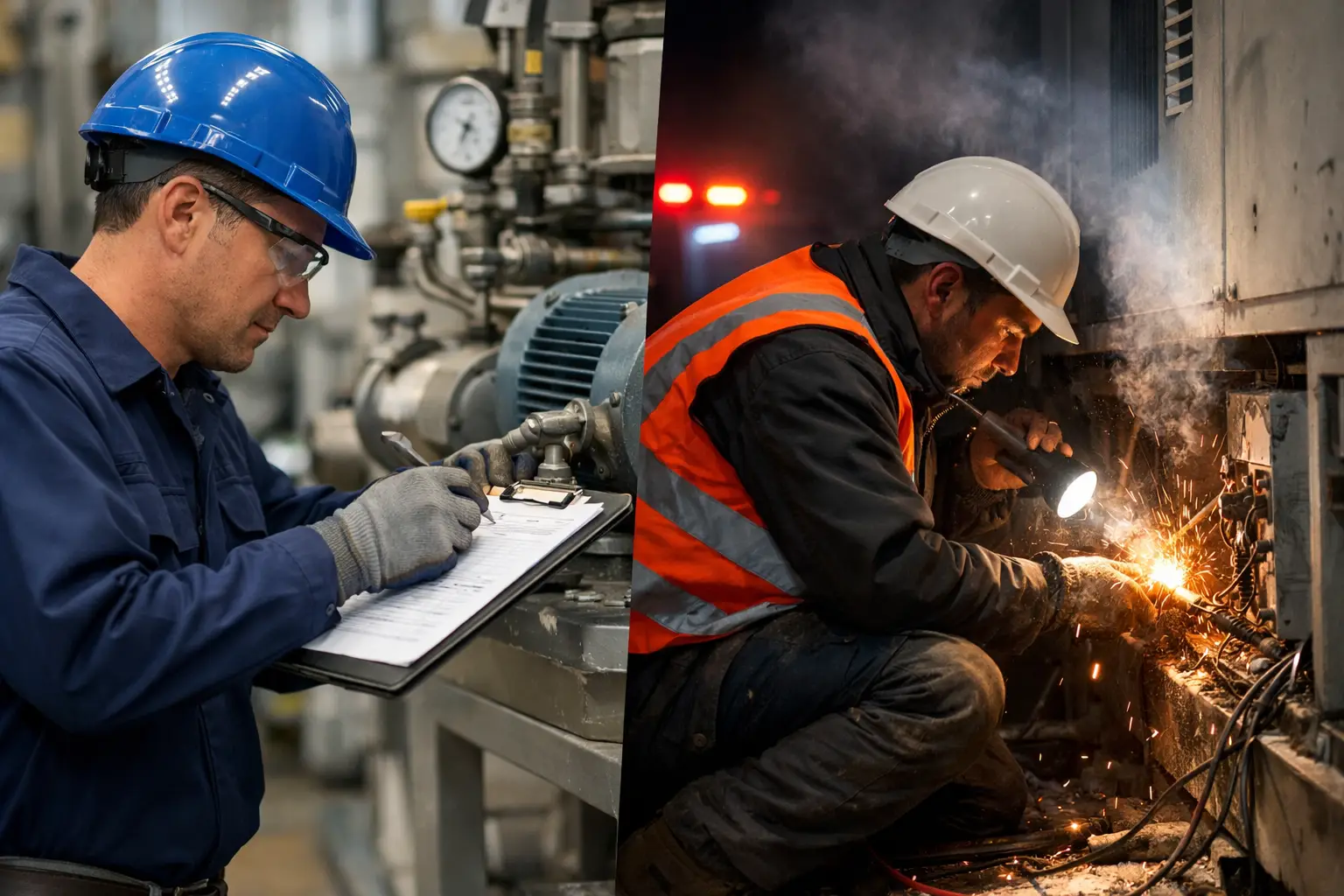
The key difference is control. Planned maintenance gives an owner more control over timing, vendor availability, material selection, tenant notice, and cost. Emergency work demands a rapid response, often at inconvenient hours, when the priority is stopping damage and restoring function. That urgency is necessary, but it usually costs more than a planned visit.
For a single rental home, one emergency may feel manageable. For a portfolio of homes, apartments, commercial spaces, or vacation rentals, repeated emergencies create a pattern: inconsistent spending, frustrated residents, missed business hours, and constant vendor chasing.
Why Emergency Repairs Cost More Than the Invoice
The invoice for an emergency repair is only one part of the expense. A failed HVAC system can lead to a same-day service call, a tenant complaint, a portable cooling solution, and a potential lease-renewal problem. A slow leak that goes unnoticed can damage flooring, drywall, cabinetry, and nearby electrical components before anyone sees the source.
There is also an operational cost. Emergency work interrupts your day and forces quick decisions with limited information. You may need to approve work remotely, coordinate access, notify tenants, communicate with insurance, or arrange follow-up repairs after the immediate issue is contained. If multiple trades are involved, a simple problem can turn into several separate appointments.
Commercial property owners face another layer of risk. A plumbing backup, electrical failure, or unsafe entry point can disrupt a tenant's business, reduce customer access, and create pressure for an immediate solution. In those moments, reliable response matters. But a regular inspection program can often identify warning signs before a failure affects operations.
What Preventive Maintenance Actually Protects
Maintenance is not busywork. It is asset protection. A property that receives consistent attention generally experiences fewer major failures, more predictable expenses, and less deferred work waiting to surface during a turnover or inspection.
HVAC performance and indoor comfort
In Marion County, HVAC maintenance should be a priority, not an optional extra. Long cooling seasons put steady demand on equipment. Dirty filters, clogged condensate drains, worn electrical connections, and neglected coils can reduce efficiency and increase the chance of a breakdown when residents need cooling most.
Routine service helps identify issues such as poor drainage, unusual system cycling, weak airflow, and components showing signs of wear. It cannot guarantee that an older unit will not fail, but it gives owners time to plan for repairs or replacement instead of reacting to a no-cooling call.
Plumbing damage that starts small
Many costly water events begin with a minor warning: a slow drip under a sink, a toilet that runs intermittently, moisture around a water heater, low pressure at one fixture, or a drain that clears more slowly than usual. Left alone, those small issues can cause mold concerns, damaged finishes, high water bills, and unhappy tenants.
Scheduled inspections are especially useful between tenancies and in vacant units, where a leak may continue for days without being reported. Checking exposed supply lines, shutoff valves, drains, water heaters, and visible signs of moisture is far less disruptive than repairing water damage after the fact.
Electrical safety and dependable operation
Flickering lights, warm outlets, tripped breakers, and overloaded circuits should not be treated as minor annoyances. They can signal problems that deserve licensed evaluation. Preventive electrical checks are useful when properties have aging panels, frequent tenant turnover, added appliances, exterior lighting, or commercial equipment that changes the load on the system.
A planned assessment allows the owner to correct concerns before they become an after-hours safety call. It also provides a clearer record of what was inspected and what work was completed.
Exterior and weather-related wear
Florida sun, rain, humidity, and storm seasons are hard on exterior surfaces. Loose gutters, damaged caulking, failing screens, overgrown landscaping, deteriorated trim, and roof penetrations can all allow water or pests into a property. Small exterior issues rarely stay small through a season of heavy weather.
Regular exterior walk-throughs help identify items that affect curb appeal, safety, drainage, and building protection. This is particularly valuable for vacant properties, seasonal homes, and rentals where tenants may not notice or report every exterior concern.
When Emergency Repair Is the Right Call
There is a time to schedule work, and there is a time to act immediately. A property owner should treat active water leaks, sewage backups, electrical burning smells, sparking equipment, gas concerns, loss of essential cooling in severe conditions, broken locks, storm damage, and structural hazards as urgent issues.
Trying to save money by waiting on a true emergency can create a much larger bill. If water is actively spreading, the first priority is stopping the source and protecting the property. If an electrical issue may be unsafe, the priority is making the area safe and arranging qualified service. If a tenant cannot secure their home, prompt action protects both the resident and the owner.
The practical point is this: preventive maintenance reduces emergency calls, but it should never cause an owner to delay a repair that threatens safety, habitability, security, or further property damage.
A Practical Maintenance Schedule for Rental and Commercial Properties
The right schedule depends on the age of the building, number of units, equipment condition, tenant use, and whether the property is occupied year-round. A newer single-family rental may need a lighter schedule than an older multi-unit building with aging plumbing and high tenant turnover.
At minimum, owners should plan seasonal HVAC attention, regular filter changes where applicable, inspections of visible plumbing and water heaters, exterior walk-throughs, and prompt follow-up on tenant-reported concerns. Turnovers are also a critical maintenance window. With the unit vacant, it is easier to inspect appliances, test fixtures, look for leaks, repair damaged surfaces, service systems, and complete work before a new tenant moves in.
For larger portfolios, the most useful approach is often a recurring calendar rather than waiting for requests. Assign work by property, unit, system, and season. Record what was found, what was repaired, and what may need future replacement. Photo documentation makes it easier to track condition over time and gives owners a clear view of where maintenance dollars are going.
How to Decide Where to Spend First
If your maintenance budget is limited, start with items that can cause the most damage or disruption when they fail. Water intrusion, HVAC reliability, electrical safety, roof and exterior protection, and security issues should generally take priority over cosmetic improvements.
Next, look for repeat calls. If the same drain clogs every few months, the answer may not be another quick clearing. If an air conditioner repeatedly loses performance, the unit may need a deeper diagnosis. If tenants keep reporting a door that will not latch, the issue may involve alignment, frame movement, or hardware wear rather than a simple adjustment.
This is where a single accountable maintenance team has value. Instead of starting from zero with a different contractor on every call, the team can see the property's repair history, identify recurring issues, coordinate the right trade, and recommend a practical next step. R&M Services helps owners handle both routine upkeep and urgent repairs without turning every maintenance issue into a separate vendor search.
Build a Plan Before the Next Call Comes In
A useful maintenance plan does not need to be complicated. Start by listing your properties, major systems, equipment ages, recurring issues, tenant access needs, and upcoming turnover dates. Then identify what should be inspected seasonally, what should be handled between tenants, and what situations require immediate emergency response.
The best time to make those decisions is when the property is functioning normally. A scheduled inspection, documented repair history, and dependable local response plan give you options when something eventually fails. That means fewer surprises, faster decisions, and a property that stays ready for the people who depend on it.