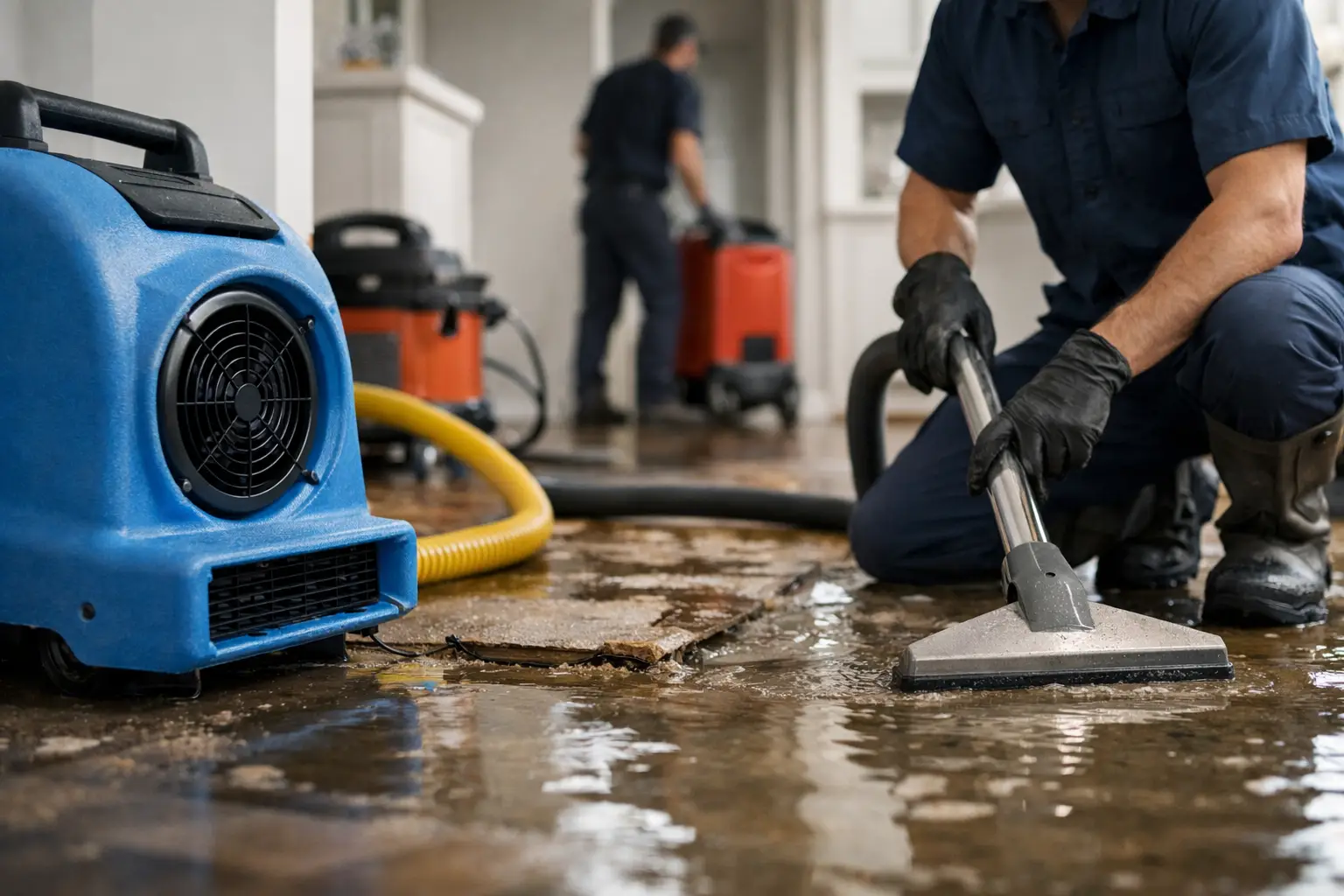
A tenant calls at 2 a.m. because water is coming through the ceiling. A supply line fails under a vacant unit sink. Heavy rain finds one neglected roof opening and reaches the flooring before anyone notices. In each case, water damage emergency cleanup is not just about removing visible water. It is about stopping the source, protecting people, documenting the loss, and getting the property back under control before a small incident becomes a major repair.
For owners and managers in Ocala, Dunnellon, and Marion County, the first 24 hours matter most. Florida heat and humidity can speed up drying problems, while an occupied property adds tenant safety, communication, and habitability concerns. Fast action protects the building, reduces disruption, and helps preserve rental income.
Start With Safety and Stop the Water
Before anyone starts moving furniture or pulling up wet carpet, identify immediate hazards. If water is near electrical outlets, appliances, breaker panels, or ceiling fixtures, keep people away from the area. Do not walk through standing water if electricity may be involved. A licensed professional should evaluate electrical concerns before power is restored to the affected area.
Next, stop the source if it is safe to do so. Shut off the local fixture valve for a leaking toilet, sink, or appliance connection. If the source cannot be isolated, shut off the building's main water supply. Every rental, commercial space, and HOA common area should have a clearly identified main shutoff valve. This is one of the simplest preventive details that can save thousands in repairs.
The source is not always obvious. Water dripping from a ceiling may come from a bathroom above, a damaged roof, an HVAC condensate line, or a plumbing leak inside a wall. Treat the visible water as the symptom until the actual source has been confirmed and corrected.
Water Damage Emergency Cleanup Is a Triage Job
The right response depends on the type of water, the affected materials, and how long the area has been wet. Clean water from a broken supply line may be recoverable if it is addressed quickly. Water from a backed-up drain, overflowing toilet, or exterior flooding requires greater caution because it may contain contaminants.
Do not assume that an area is dry because the surface looks dry. Water can travel under baseboards, beneath vinyl flooring, into drywall, behind cabinets, and through insulation. A wet ceiling may sag hours after the initial leak stops. A damp wall can develop odor, staining, and mold growth if moisture remains trapped.
Your immediate priorities should be clear:
- Protect people from electrical, slip, ceiling-collapse, and contamination hazards.
- Stop the active water source and prevent more water from entering.
- Remove standing water and protect dry belongings from further exposure.
- Document conditions before major cleanup or demolition begins.
- Arrange proper drying, repairs, and communication with tenants or occupants.
This is not the time to wait for a contractor to call back the next morning. The longer water remains in building materials, the more likely the job expands from a plumbing repair into flooring replacement, drywall removal, cabinet work, odor treatment, and a longer vacancy.
Document Before the Evidence Disappears
Owners often think of documentation only after speaking with an insurance carrier. It is useful much earlier than that. Photos and videos establish where the water started, how far it spread, which rooms were affected, and what contents were damaged. They also give owners, property managers, maintenance teams, and tenants one shared record of the event.
Take wide photos of each affected room, then closer images of the source, damaged materials, and visible water lines. Capture serial numbers for appliances or equipment if relevant. Record the date, time discovered, who reported the issue, steps taken to stop the water, and when vendors arrived.
For rental properties, document tenant communication as carefully as the physical damage. Confirm whether residents need to avoid a room, whether water service or power has been interrupted, and what the next update will be. Clear communication reduces frustration when an emergency repair affects daily routines.
Remove Water, Then Dry the Structure
Mops and towels can help with a minor spill, but they are not a drying plan for a significant leak. Standing water needs prompt extraction. Wet rugs, boxes, furniture, and contents should be moved away from the area when possible. Do not stack wet materials in a garage or closet where moisture can stay trapped.
Drying requires airflow, dehumidification, and moisture monitoring. Opening windows may help in some conditions, but it is not always the best choice in humid Florida weather. Bringing humid outdoor air into a conditioned space can slow drying. Fans alone may spread moisture or odors without removing enough humidity from the air.
Materials also react differently. Tile may survive a clean-water event, while the underlayment or wall behind it may not. Laminate flooring often swells at the seams. Drywall can absorb water above the visible line. Carpet and padding may be salvageable in limited clean-water situations, but contamination, extended saturation, and odor change the decision.
A practical cleanup plan should be based on moisture readings and the condition of the materials, not guesswork. Drying too slowly can create hidden damage. Removing materials too aggressively can increase cost and delay the return to service. The right approach depends on the source, exposure time, and what the affected building components can realistically recover from.
Watch for Ceiling and Wall Damage
Water-damaged ceilings deserve special attention. A bubbling, stained, or sagging ceiling may be holding a significant amount of water. Keep residents out from beneath it. Do not puncture a sagging ceiling without understanding what is above it, especially if wiring or contaminated water may be present.
Walls may need access openings if water has entered the cavity. That is disruptive, but controlled access can be less expensive than allowing damp insulation, framing, or drywall to remain hidden behind a finished wall.
Coordinate the Full Repair, Not Just the Leak
Fixing the pipe is essential, but it is only one part of the job. A complete response may require plumbing, electrical evaluation, drywall repair, flooring work, cabinet repair, painting, HVAC attention, and cleaning. When several trades are involved, fragmented scheduling can add days to the repair and leave owners chasing updates.
This is where a single accountable local team makes a real difference. R&M Services can coordinate emergency repairs and the follow-up work needed to restore an affected property, with communication and job documentation that keep owners informed without requiring them to manage every trade themselves.
For an occupied unit, the repair plan should also address access, tenant notice, temporary use restrictions, and the timeline for returning rooms to normal. For a vacant unit, speed matters because every extra day of repair can push back make-ready work and the next lease date.
Common Mistakes That Make Water Losses Worse
The most expensive water damage problems often start with a few understandable but avoidable mistakes. Waiting to see if materials dry on their own is one. Covering wet flooring with rugs or furniture is another. So is repainting a stain before the leak source and moisture level have been addressed.
Owners should also avoid treating every water event the same way. A clean-water leak caught immediately is different from a sewer backup or a roof leak that has been soaking insulation for days. Contaminated water calls for protective procedures and may require removal of materials that could otherwise have been dried.
Finally, do not let the visible repair become the only repair. Replacing a damaged ceiling section without addressing the roof, plumbing, condensate drain, or appliance connection that caused the problem guarantees another call later.
Build a Better Emergency Plan Before the Next Leak
Water emergencies are easier to manage when the basic information is already in place. Keep water shutoff locations documented, make sure tenants know who to call after hours, and inspect common failure points before they become emergencies. Supply lines, water heaters, washing machine hoses, HVAC drain lines, roof penetrations, irrigation components, and vacant units all deserve regular attention.
For multi-unit and commercial properties, establish a simple escalation process: who receives the first call, who has authority to approve emergency work, how tenants are updated, and where photos and invoices are stored. That process protects response time when an owner is traveling or a manager is handling multiple properties.
The best water damage emergency cleanup is the one that begins quickly, stays organized, and ends with the actual cause corrected. When water shows up where it does not belong, act early, keep a clear record, and get the property dry before the damage has time to spread.