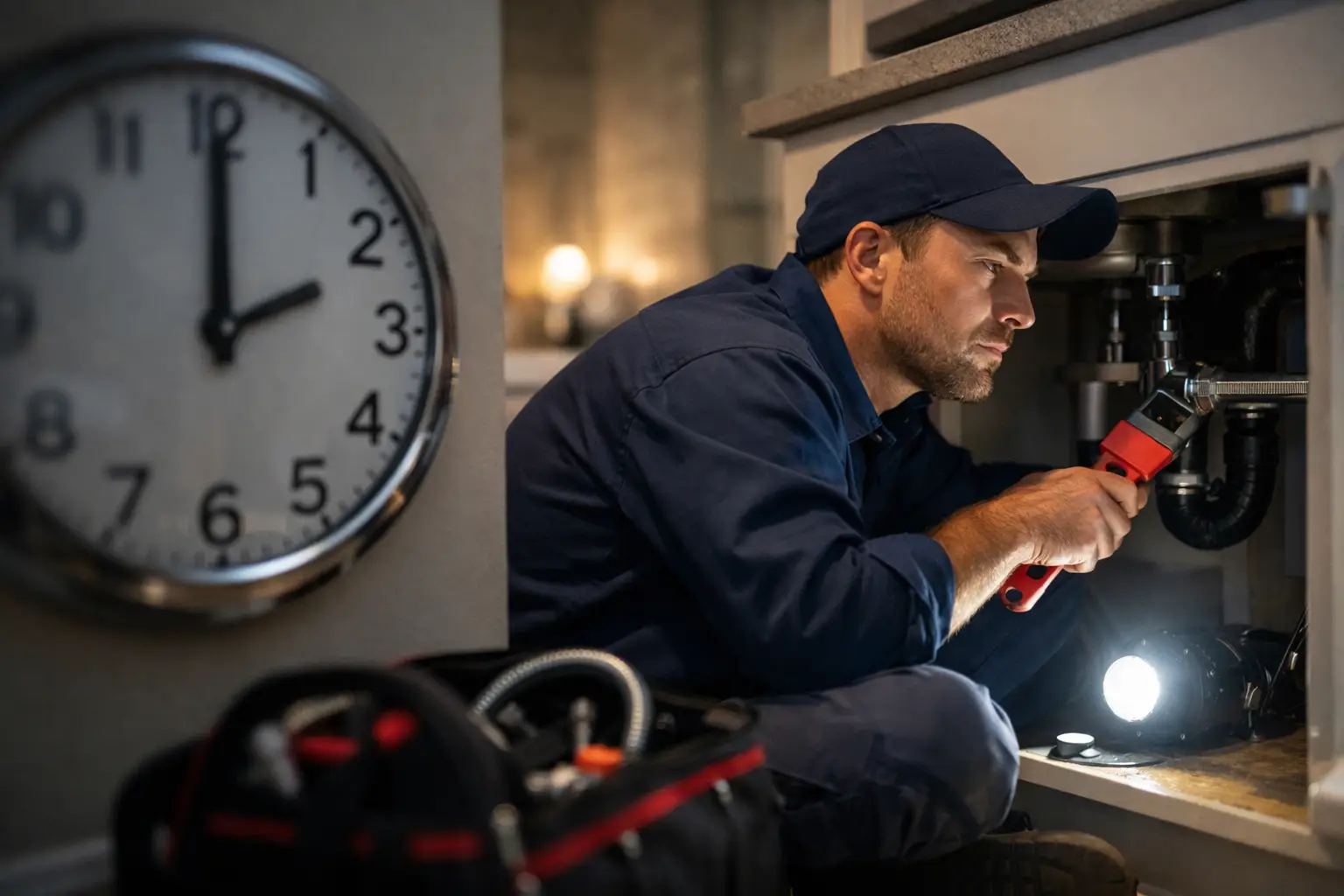
A toilet overflowing at 11:30 p.m. is not a problem that can wait until the next business day. Neither is water spreading from a failed supply line, a sewer backup in an occupied rental, or a burst pipe soaking a vacant unit. For owners and managers, 24 hour plumbing repair Ocala service is about more than restoring water. It is about limiting property damage, keeping residents safe, and protecting the income-producing condition of the property.
The right response depends on the situation. Some plumbing problems need an immediate after-hours dispatch. Others can be contained safely until morning, which may reduce unnecessary emergency costs. Knowing the difference gives property owners a better path forward when a call comes in after normal business hours.
What Counts as a Plumbing Emergency?
A plumbing emergency is any active issue that threatens people, property, sanitation, or normal building operations. The key word is active. A slow drip under a bathroom sink needs attention, but a pipe spraying water into a cabinet or wall needs immediate action.
Call for emergency service when there is uncontrolled water, sewage exposure, a serious leak near electrical equipment, or a complete loss of water at an occupied property. A water heater leaking heavily, a toilet that will not stop overflowing, and a main drain backup affecting multiple fixtures also deserve urgent attention.
For landlords, the urgency is not just about the repair itself. Water that reaches flooring, drywall, cabinets, or adjoining units can create a much larger restoration project. In a multifamily building, one overflowing fixture can affect a downstairs resident, shared corridors, or electrical systems. Fast action is usually less expensive than waiting for damage to spread.
A single slow drain, a faucet that drips only when in use, or a toilet that runs without overflowing may be able to wait until regular hours. That said, the decision changes if the affected fixture is the only usable bathroom in an occupied unit, if a tenant has mobility or health needs, or if the problem is worsening quickly.
First Steps Before the Plumber Arrives
The goal in the first few minutes is containment. Do not ask a tenant or onsite employee to take on a risky repair. Give them clear, simple directions that reduce damage without putting them in harm's way.
If water is coming from a toilet, sink, or appliance connection, shut off the nearest fixture valve if it is accessible and safe to reach. For a toilet, the valve is usually on the wall behind or beside the fixture. For a major leak or a pipe break, shutting off the property's main water supply may be necessary.
Move towels, boxes, electronics, and furniture away from the affected area where possible. If water is near outlets, power strips, appliances, or an electrical panel, do not touch electrical equipment or stand in pooled water. Keep people away from the area and report the electrical concern when requesting service.
For a drain or sewer backup, stop using water throughout the affected area. Running a dishwasher, flushing another toilet, or using a washing machine can force more wastewater back through a blocked line. Sewage should be treated as a sanitation issue, not a cleanup project for an untrained resident.
Photos and a short video can be useful, especially for rental owners who are not onsite. Document the source of the leak if visible, the affected rooms, and any damaged finishes or belongings. Good documentation helps establish what happened, supports clear communication, and creates a record for repair planning.
A Better Process for After-Hours Plumbing Calls
After-hours calls can become chaotic when tenants, owners, maintenance staff, and multiple contractors all receive incomplete information. A simple process keeps the work moving and prevents avoidable back-and-forth.
1. Get the facts from the person onsite
Start with the property address, unit number, caller's name and phone number, and whether the water is currently shut off. Ask where the water is coming from, whether it is clean water or sewage, which fixtures are affected, and whether water has reached another unit or electrical equipment.
This information helps determine the proper response. A backed-up kitchen sink and a main sewer stoppage may sound similar in a short text message, but they require different troubleshooting and equipment.
2. Stop the damage, then diagnose the cause
Emergency plumbing service should focus first on stabilizing the situation. That may mean shutting off water, stopping an overflow, isolating a failed fixture, clearing an urgent blockage, or making a temporary repair to prevent additional damage.
Once the immediate risk is controlled, the cause needs to be identified. A recurring toilet backup may point to a drain-line obstruction. A wet ceiling below a bathroom could come from a supply line, drain pipe, shower pan, or failed seal. Guesswork can lead to repeat visits and repeated tenant disruption.
3. Document the work and the next repair decision
Some emergencies can be fully repaired during the first visit. Others require parts, drying work, access to another unit, or a planned follow-up. Owners should receive a clear explanation of what was found, what was done to stabilize the property, and what work remains.
For portfolios and managed properties, job photos and written notes matter. They give owners visibility without requiring a late-night site visit, and they help establish whether a follow-up repair is a maintenance issue, a resident-caused damage issue, or a larger capital repair.
Why Fast Plumbing Repairs Protect Rental Income
An unresolved plumbing issue can affect habitability, tenant satisfaction, and turnover timelines. If a unit has no usable bathroom, active sewage, or significant water intrusion, the problem can quickly become a vacancy risk or a lease compliance concern.
Fast response also protects the parts of the property that are expensive to replace. Flooring, cabinets, baseboards, drywall, insulation, and paint can all be affected by a leak that continues overnight. In Florida's humid climate, delayed drying can add another layer of concern. The plumbing repair may be straightforward, but the damage from waiting often is not.
Commercial properties face their own pressure. A restroom backup in an office, retail space, or restaurant can interrupt operations and create a poor experience for staff and customers. Owners need a local team that can respond, communicate with the onsite contact, and coordinate the next steps without making the owner chase separate vendors.
R&M Services is built for that practical role across Ocala, Dunnellon, and Marion County: one accountable local team for urgent repairs, routine maintenance, and the follow-up work that keeps a property operational.
Common Problems That Should Not Be Ignored
Not every plumbing problem requires a midnight response, but several issues deserve prompt scheduling even when they are not actively flooding. A recurring drain clog can signal a developing blockage. Low water pressure in one area may come from a failing fixture, leak, or supply issue. A water heater that shows rust, moisture around the base, or inconsistent hot water can fail at the worst possible time.
Leaks under sinks are also easy to dismiss because they are hidden behind cabinet doors. Over time, even a minor leak can damage cabinet bottoms, encourage mold growth, and create a more costly repair. A routine inspection is often enough to catch these issues before they become an emergency call.
For vacant properties, regular checks are especially valuable. A small leak may go unnoticed for days if no one is living in the home. Before a turnover, inspect shutoff valves, toilets, exposed supply lines, water heaters, and under-sink connections. A rent-ready unit should not become a water-damage project because a worn hose failed after move-in.
Build an Emergency Plumbing Plan Before You Need One
Owners with multiple units should have a clear maintenance reporting process. Tenants need to know who to contact, when to call, how to shut off water if safe, and what details to provide. Keep the main water shutoff location documented for every property, including vacant homes and commercial spaces.
It also helps to set expectations around access. If an emergency occurs in a tenant-occupied unit, someone may need to authorize entry quickly. For HOAs, condos, and apartment communities, management should know who is responsible for common lines, unit-level fixtures, and after-hours decision-making.
The best emergency outcome is not simply getting someone to the property. It is getting the right information to the right repair team, stopping damage quickly, documenting what happened, and making sure temporary fixes become completed repairs. When water is moving where it should not, a calm and accountable response protects far more than a pipe.