A failed air conditioner in a Marion County rental is not a minor inconvenience. During a Florida heat wave, it can become an urgent tenant issue, a lease-renewal problem, and an expensive after-hours repair in a matter of hours. A consistent seasonal HVAC maintenance checklist gives owners and managers a better option: find small problems before they disrupt occupancy, comfort, or cash flow.
For a single rental, preventive service helps avoid a surprise replacement or emergency call. Across a portfolio, it creates a repeatable system for protecting equipment, documenting property condition, and keeping residents informed. The right checklist is not complicated, but it does need to account for Florida's long cooling season, high humidity, frequent storms, and heavy system runtime.
Why Seasonal HVAC Maintenance Matters in Florida
In many parts of the country, HVAC maintenance means preparing a furnace for winter and an air conditioner for summer. In Ocala, Dunnellon, and the rest of Marion County, cooling systems carry most of the workload for much of the year. That means filters load up faster, drain lines see more condensation, and minor airflow issues can put extra strain on equipment.
Deferred maintenance is usually cheap at first and expensive later. A clogged condensate drain may begin as a slow drip, then lead to ceiling damage, mold concerns, or a system shutdown. A dirty filter may look like a small tenant housekeeping issue, but it can restrict airflow, freeze an evaporator coil, and shorten the life of the compressor.
For landlords and property managers, the goal is not simply to keep the unit running today. It is to reduce emergency calls, prevent avoidable interior damage, support tenant comfort, and make informed repair-or-replace decisions before equipment fails at the worst possible time.
The Seasonal HVAC Maintenance Checklist
The schedule below works well for rental homes, condos, small multifamily buildings, offices, and retail spaces. Exact timing depends on system age, tenant behavior, occupancy, pets, nearby construction, and whether the property has heavy dust or landscaping debris around the outdoor unit.
Spring: Prepare Before Peak Cooling Demand
Spring is the best time to schedule a professional cooling-system inspection. Waiting until the first sustained heat wave often means longer service windows and more pressure to approve an emergency repair.
Start inside the property. Replace or inspect the air filter and confirm the filter size is correct. Disposable filters are commonly changed every 30 to 90 days, but rentals with pets, smokers, or high occupancy may need more frequent changes. A tenant can usually handle a basic filter replacement when access is straightforward, but the owner or manager should still set the schedule and confirm it happened.
Next, test the thermostat in cooling mode. Make sure the system starts, produces cool air, and shuts off normally at the selected temperature. Check supply vents for strong airflow and listen for unusual rattling, grinding, or repeated cycling. A system that runs constantly without reaching the set temperature deserves attention before summer arrives.
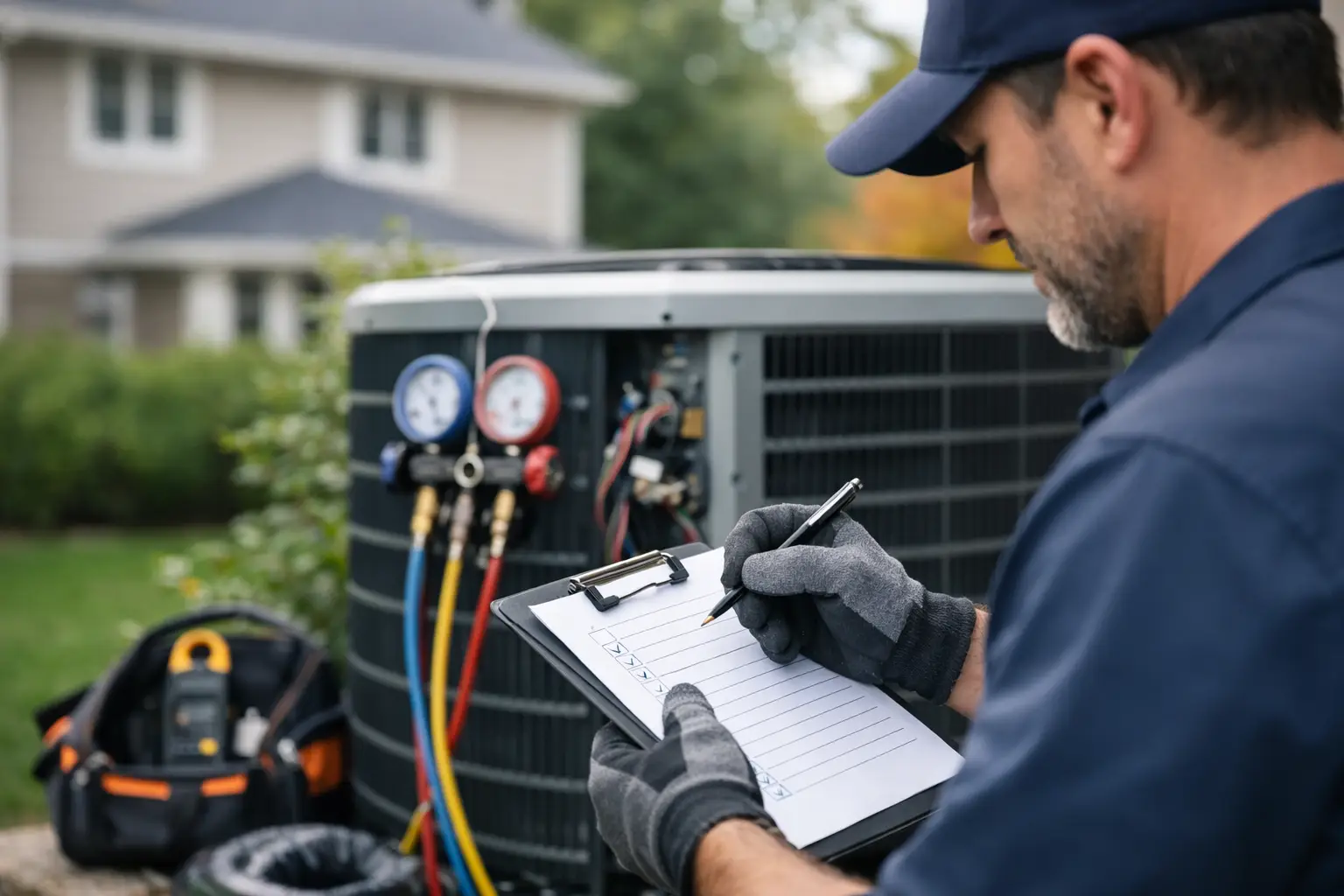
A licensed HVAC technician should inspect electrical components, refrigerant performance, blower operation, coils, duct condition, and the condensate drain system. Refrigerant is not a routine top-off item. If levels are low, the system may have a leak that needs to be located and repaired.
Outside, clear leaves, mulch, vines, and stored items from around the condenser. Maintain open space around the unit so it can reject heat properly. Do not use a pressure washer on coils or bend fins with improvised tools. Those shortcuts can cause damage that costs more than proper cleaning.
Summer: Protect Airflow and Drainage
Florida summer maintenance is mostly about monitoring the system while it is under the greatest load. Confirm that the filter is clean, vents are not blocked by furniture, and the outdoor unit remains clear after mowing or landscaping work.
Pay close attention to the condensate drain. High humidity produces a large amount of moisture, and algae or debris can clog a drain line quickly. Warning signs include water near the indoor air handler, a wet drain pan, musty odors, ceiling stains, or a float switch that shuts the system down. A professional can clean and treat the line as part of service, which is far less disruptive than repairing water-damaged drywall.
This is also a good time to review tenant communication. Residents should know where the filter is located, how often it should be changed, and when to submit a maintenance request. They should not remove equipment panels, reset breakers repeatedly, or attempt refrigerant and electrical repairs. Clear instructions help separate a simple filter issue from a legitimate service call.
For vacant units, do not turn the HVAC completely off during humid weather. A moderate temperature setting can help control indoor moisture and protect finishes, appliances, and furnishings. The right setting depends on the property and how long it will be vacant, but leaving a home closed up and unconditioned through a Florida summer creates avoidable risk.
Fall: Inspect After Heavy Use
Even though the cooling season may continue, fall is the time to inspect what summer revealed. Review service history, tenant reports, utility concerns, and any recurring comfort complaints. One room that is always warmer than the rest could point to duct leakage, poor return airflow, insulation gaps, or an undersized system. Replacing parts without identifying the cause can waste money.
Have the system checked if it needed repeated repairs, froze up, tripped breakers, or struggled to maintain temperature during peak heat. Owners should also examine the age of the equipment. A repair may make sense on a newer system with a clear, isolated problem. On an older unit with rising repair costs and declining efficiency, planned replacement may be the better business decision.
Fall is also a practical time to verify the heat function. Marion County does have cool nights and occasional cold snaps. Test heating operation before a resident discovers a problem on the first cold evening of the year.
Winter: Keep the System Ready, Not Forgotten
Winter HVAC tasks are lighter, but they still matter. Check filters, test the thermostat, and verify that the heat source operates safely. If the system includes a heat pump, it should switch properly between heating and cooling modes. For properties with gas heat, professional inspection of combustion components and venting is especially important.
After major storms or periods of heavy wind, inspect the outdoor unit for branches, debris, shifted pads, or damaged disconnects. Do not assume the equipment is fine just because it still turns on. Small exterior damage can become a bigger failure when cooling demand returns.
What to Document at Every Visit
A checklist only helps if it creates a record. For rental and commercial properties, document the date, filter condition, thermostat setting, observed issues, work completed, recommended repairs, and photos when useful. This gives owners a clear maintenance history and helps resolve questions about recurring problems or tenant-reported concerns.
Keep records tied to the property and unit, not in a technician's personal notes or a loose stack of invoices. When a unit eventually needs replacement, documented repair history makes the decision easier to justify and budget.
When to Call for HVAC Service Right Away
Some issues should not wait for the next seasonal visit. Arrange service promptly when a system stops cooling or heating, leaks water indoors, trips a breaker, produces a burning smell, makes loud mechanical noises, or causes a tenant to report persistent humidity or poor airflow. In occupied rentals, speed matters because comfort problems can quickly affect resident satisfaction and retention.
R&M Services helps Marion County owners coordinate HVAC maintenance, repairs, tenant communication, and property documentation through one accountable local team. That approach is particularly useful when an HVAC issue also involves a ceiling leak, electrical concern, access coordination, or a make-ready deadline.
A clean filter and a scheduled inspection may not feel urgent when everything is running well. That is exactly why they work. Put the next service date on the calendar before peak demand arrives, and give your property a better chance of staying comfortable, dry, and rent-ready when tenants need it most.