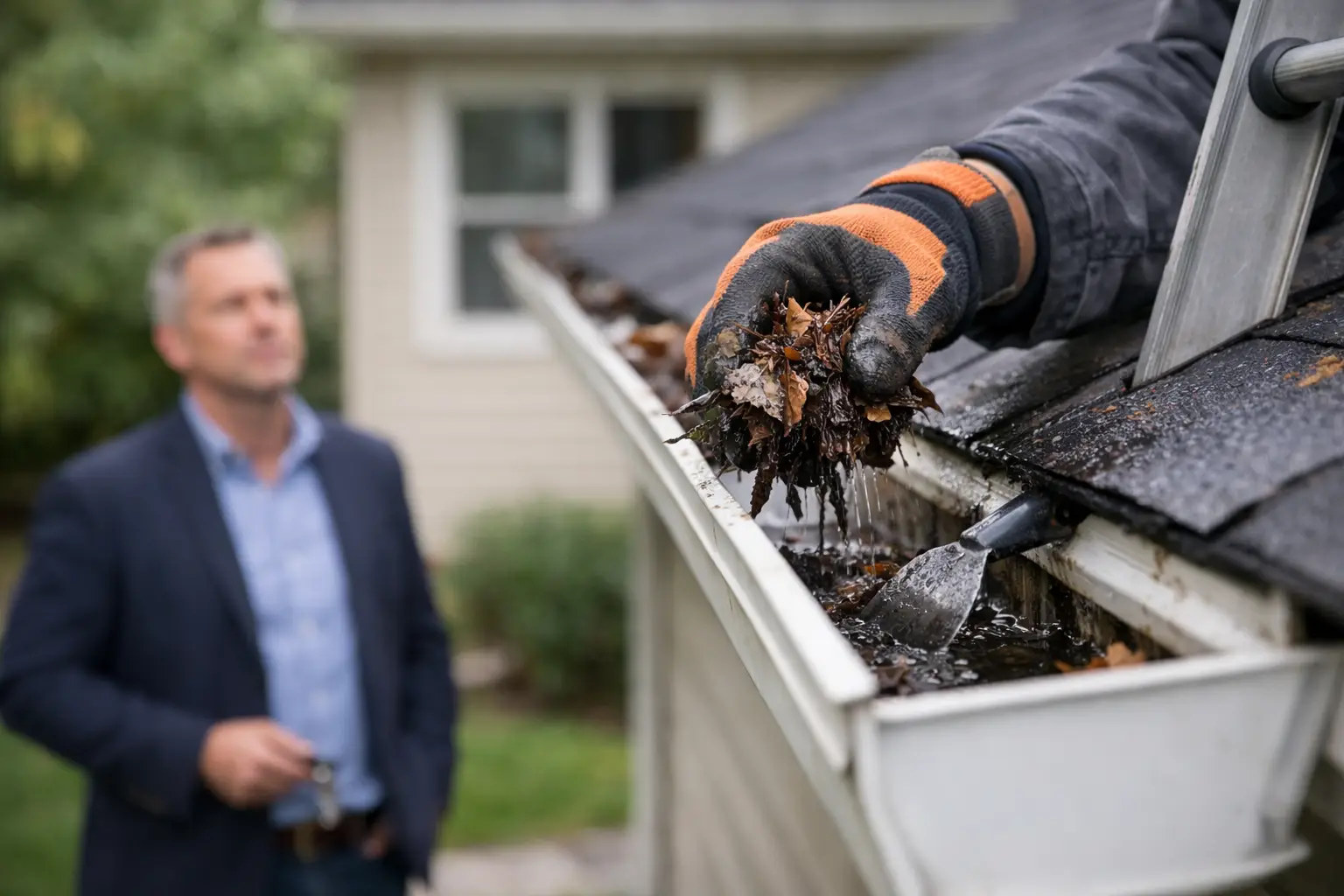
A gutter can be full long before a tenant notices a problem. By the time water spills over the edge during a Florida downpour, it may already be soaking fascia boards, washing out landscaping, staining siding, or pooling beside the foundation. Gutter cleaning for landlords is not a cosmetic task. It is practical preventive maintenance that helps protect the rental, avoid urgent calls, and keep small exterior issues from becoming expensive repairs.
For owners managing homes in Ocala, Dunnellon, and across Marion County, the challenge is rarely understanding that gutters need attention. The challenge is getting it done on time, documenting the work, and knowing someone checked for related damage while they were up there.
Why Clogged Gutters Become Landlord Problems
Gutters move roof runoff away from the building. When leaves, pine needles, roof grit, seed pods, and shingle debris block that path, water finds another one. It can pour over the gutter lip, back up beneath roof edges, or discharge in one concentrated spot beside the home.
That creates problems landlords are usually called about only after damage is visible. Overflow can rot fascia and soffit materials, loosen gutters, damage exterior paint, and contribute to roof-edge leaks. Water falling near entryways can make walkways slippery. Constant saturation around the home can also erode mulch beds and create muddy, unattractive areas that affect curb appeal and tenant satisfaction.
In Florida, heavy rain makes timing especially important. A gutter that handled a light shower may overflow quickly during a summer storm. Properties surrounded by mature oaks, pines, or other shedding trees often need more attention than a home on an open lot. There is no one schedule that fits every rental.
The cost comparison is straightforward. Scheduled cleaning is predictable. Repairing rotten trim, replacing damaged sections of gutter, correcting drainage damage, or responding to a leak after a storm is not.
How Often Should a Rental Property's Gutters Be Cleaned?
For many rentals, twice a year is a sensible starting point: once after the heaviest leaf drop and again before or during the rainy season. But landlords should adjust that schedule based on the property rather than follow a calendar blindly.
A home beneath large trees may need cleaning every three to four months. A newer property with few nearby trees may need a thorough inspection and cleaning once or twice a year. Roof design matters too. Low-slope areas, valleys, and gutters beneath roof sections that shed heavy debris can clog faster than other parts of the system.
Storm events are another reason to inspect outside the normal schedule. High winds can fill a previously clear gutter with branches and leaves in one afternoon. If a tenant reports water pouring over an eave, a gutter issue should be checked promptly, especially if the overflow is close to doors, exterior walls, or the foundation.
Rather than waiting for a complaint, build gutter service into a preventive maintenance plan. This is particularly useful for owners with several rentals, vacant units, or properties located far from where they live.
What a Proper Gutter Cleaning Should Include
Clearing visible debris is only part of the job. A landlord needs confirmation that water can actually travel through the full system and discharge away from the building.
A complete service should remove debris from gutters and roof valleys where safe and appropriate, clear downspout openings, and test water flow. The technician should look for sagging sections, loose hangers, separated joints, rust, cracked end caps, and downspouts that empty too close to the foundation. They should also note signs of water damage along the fascia, soffit, siding, roof edge, and surrounding ground.
Documentation matters. Before-and-after photos give owners a record of the condition found, the debris removed, and any repair recommendations. That is useful when planning maintenance budgets, tracking recurring trouble spots, or showing that the property has been actively maintained.
If repairs are needed, cleaning and repair work should be coordinated rather than left as separate problems for the owner to chase down. A loose downspout bracket or failing gutter joint may be a small repair now. Left alone through several storms, it can create a much larger exterior maintenance issue.
Gutter Cleaning for Landlords Is About Drainage, Not Just Debris
It is easy to focus on what is sitting inside the gutter. The more useful question is where the water goes after it leaves the roof.
Downspouts should direct runoff away from the home without creating a trip hazard, flooding a walkway, or dumping water against a neighboring property. Extensions, splash blocks, grading, and nearby landscaping can all affect drainage. A clear gutter with a short or disconnected downspout can still leave water pooling beside the foundation.
This is where a hands-on property maintenance team adds value. The person cleaning the gutter can flag a deteriorating fascia board, an exterior caulk failure, a damaged screen, or a grading issue before it turns into a tenant maintenance request. One site visit can address connected problems instead of creating a chain of separate appointments.
Who Is Responsible: Landlord or Tenant?
Responsibility depends on the lease terms, the type of property, and the nature of the issue. In most rental situations, gutters are part of the building exterior and routine service is best handled by the owner or property manager. Asking tenants to climb ladders or clean elevated gutters creates safety concerns and inconsistent results.
Tenants can still play an important role. They should know to report overflowing gutters, leaks near roof edges, detached downspouts, or standing water around the house. Clear reporting expectations make it easier to respond before a manageable maintenance task becomes a repair claim.
For single-family rentals where lawn care is assigned to the tenant, do not assume that includes gutter work unless the lease is very clear. Even then, it is wise to verify completion through periodic inspections. Owners remain the ones dealing with the consequences when exterior maintenance is missed.
Warning Signs That Should Trigger Service
Some gutter problems are obvious during a storm, but many show up between rains. Watch for water stains beneath the roofline, peeling paint near fascia boards, soil erosion under downspouts, plants growing from the gutter, or gutters pulling away from the house.
Inside the rental, a stain near an exterior wall or ceiling does not automatically mean the roof is failing. A clogged gutter can force water into vulnerable roof-edge areas. It should be inspected as part of the diagnosis before approving major roof work.
Tenants may also report mosquitoes around standing water, muddy areas near the home, or water splashing around a covered entry. These are not always gutter issues, but they are good reasons to inspect the drainage system.
A Simple Way to Manage Gutter Maintenance Across Rentals
The easiest system is one that does not depend on the owner remembering every property after every storm. Start by noting each home's tree cover, roof layout, drainage concerns, and prior gutter issues. Then set a recurring service interval that matches the property's actual conditions.
At each visit, require photos and a brief condition report. If a repair is identified, decide whether it is an immediate correction, a budgeted improvement, or something to monitor. This gives owners a clear maintenance history rather than scattered text messages and last-minute invoices.
For turnover periods, include a gutter and exterior drainage check with the make-ready inspection. Vacant properties can sit through several storms without anyone noticing overflow. Catching a blocked downspout before a new tenant moves in helps deliver the rent-ready condition owners expect.
R&M Services can coordinate gutter cleaning, exterior repairs, drainage checks, and ongoing property maintenance through one accountable local team. That means less time calling multiple contractors and more confidence that the job was completed and documented.
A clean gutter will never be the feature that convinces a tenant to rent a home. But a dry entryway, sound roof edge, stable landscaping, and property that looks cared for absolutely influence how a rental performs. Schedule the work before the next heavy rain makes the decision for you.