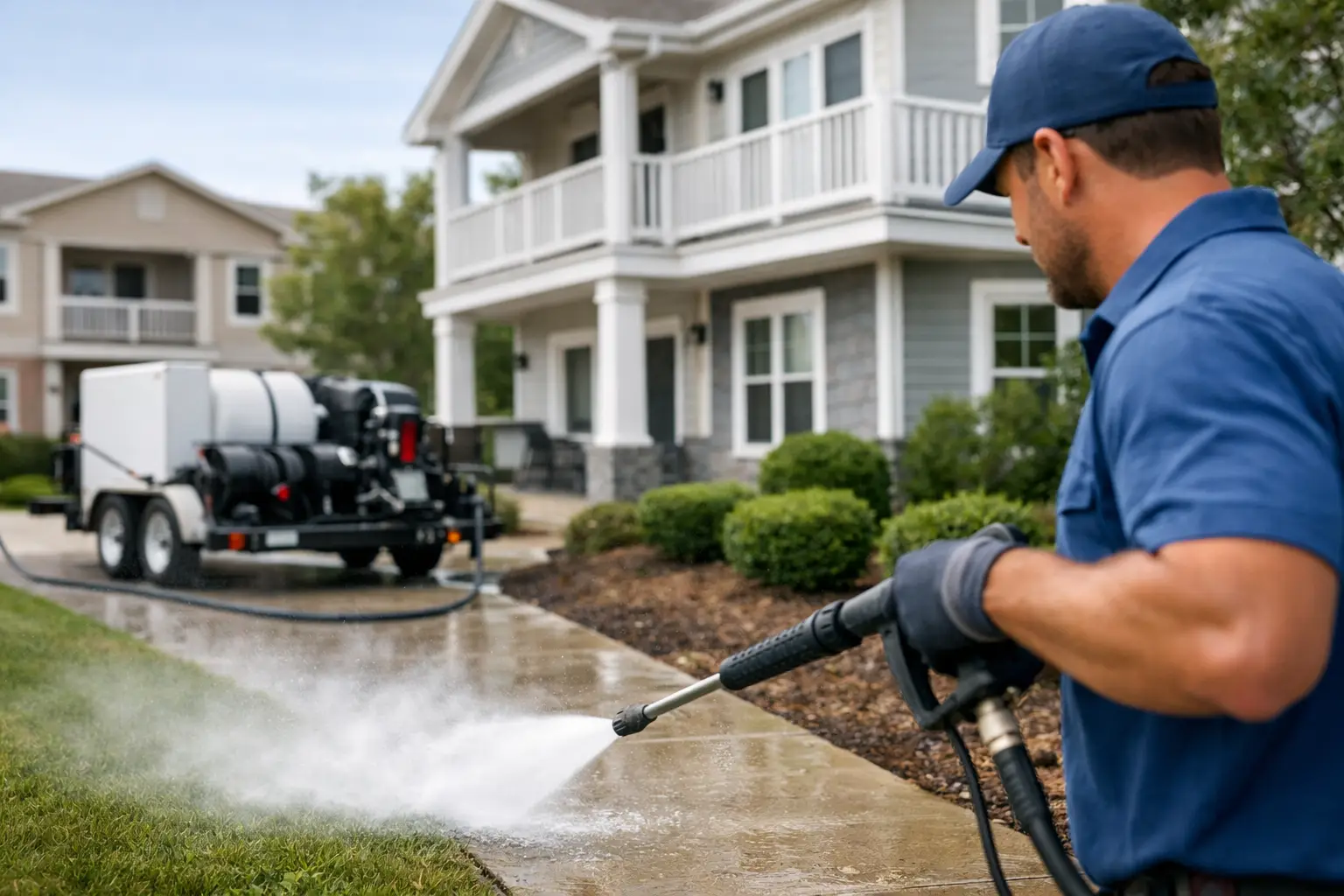
A clean exterior can be the difference between a prospective tenant seeing a well-kept home and seeing another property that needs work. Pressure washing rental properties is not just a cosmetic task in Central Florida. It is a practical part of protecting siding, walkways, driveways, patios, fencing, and first impressions while keeping turnovers on schedule.
For owners with one rental or a growing portfolio, the challenge is rarely deciding whether an exterior needs attention. The challenge is getting it handled at the right time, with the right method, without chasing another vendor or creating damage that becomes a bigger repair. A planned approach keeps the property presentable, supports rental income, and gives you documented proof that exterior maintenance was completed.
Why Pressure Washing Rental Properties Matters
Florida humidity gives algae, mildew, mold, pollen, and grime plenty of opportunity to build up. Shaded sides of buildings, screened patios, vinyl fencing, sidewalks, and concrete driveways can look stained quickly, especially after wet weather. On a rental, that buildup can make an otherwise solid property appear neglected.
Curb appeal matters when a unit is vacant and being shown, but it also matters when it is occupied. Clean common areas and safe walking surfaces tell residents that maintenance is being handled. That can reduce complaints, support retention, and prevent small exterior concerns from becoming a recurring source of frustration.
There is also a safety reason to act. Algae on concrete can become slick when wet. A green or black walkway near an entry, mailbox, pool area, or shared breezeway is more than an appearance issue. Cleaning it promptly helps reduce slip hazards for tenants, visitors, delivery drivers, and maintenance crews.
Pressure washing also makes inspections more useful. Dirt can hide failing caulk, cracks in stucco, loose trim, damaged paint, roof runoff issues, and areas where sprinklers are hitting the building. Once surfaces are clean, it is easier to see what actually needs repair rather than guessing through layers of grime.
Not Every Surface Needs High Pressure
The name can be misleading. Many exterior cleaning jobs should not be done with aggressive pressure. The correct approach depends on the surface, its age, its condition, and what is causing the staining.
Concrete driveways and sidewalks can usually tolerate more pressure than painted siding, soffits, screened enclosures, wood fencing, or older stucco. A technician who treats every surface the same can scar concrete, force water behind siding, strip paint, damage screens, or drive moisture into vulnerable areas.
For delicate surfaces, soft washing or low-pressure cleaning with an appropriate cleaning solution is often the better choice. The solution does the work of breaking down organic growth, while a gentle rinse removes it. This is particularly useful for vinyl siding, painted exterior finishes, fascia, gutters, and screened patio areas.
A good exterior maintenance team should inspect before starting. That means identifying loose materials, exposed electrical components, cracked windows, damaged screens, open gaps around doors, and areas where water should not be directed. It also means knowing when washing should wait until a repair is completed.
Watch for Existing Damage First
Pressure washing does not create every problem that becomes visible afterward, but it can expose failures that were already developing. Peeling paint, deteriorated caulk, rotted trim, and loose mortar may become more obvious after cleaning. That is useful information, but it should be documented before and after the job.
For rental owners, photos matter. They provide a clear record of property condition, help support turnover planning, and make it easier to distinguish pre-existing damage from new maintenance needs. If cleaning reveals an issue, the repair can be scheduled before it affects a showing, tenant move-in, or future inspection.
When Should Rental Owners Schedule Exterior Cleaning?
There is no single calendar that fits every property. A sunny concrete driveway in a dry, open location may stay clean far longer than a shaded duplex with mature trees and irrigation overspray. Most rentals in the Ocala and Marion County area benefit from an exterior review at least once a year, with more frequent cleaning for high-traffic or heavily shaded areas.
Turnovers are one of the best times to schedule the work. When a unit is empty, access is easier, tenant disruption is eliminated, and exterior cleaning can be coordinated with landscaping, paint touch-ups, gutter work, screen repairs, and make-ready tasks. Instead of making separate trips, the work can be handled as part of a rent-ready plan.
Before listing a vacant property is another smart trigger. Professional photos cannot fully hide a stained driveway, dirty entryway, or mildew-covered patio. Cleaning those surfaces before marketing helps the property show better from the first drive-by and can keep the listing from sitting because it looks less cared for than comparable rentals.
Occupied properties may need attention after storm season, before a lease renewal inspection, or when residents report slippery walkways. In multi-unit communities and commercial settings, cleaning can be scheduled around business hours and resident traffic to limit disruption.
Build It Into Your Turnover Process
Owners lose time and rent when turnover work happens in a scattered, last-minute sequence. One contractor cleans, another finds damaged trim, someone else handles landscaping, and the property is still not ready when the next applicant wants to view it. Exterior cleaning works best when it is part of a coordinated checklist rather than an isolated task.
Start with an exterior inspection as soon as notice is given or a vacancy is confirmed. Look at the entry, driveway, sidewalks, patios, siding, fence, screens, gutters, landscaping edges, exterior lighting, and visible drainage areas. Note what needs cleaning and what needs repair first.
Next, complete repairs that could be affected by water or that would make cleaning less effective. Loose siding, open electrical boxes, broken screens, damaged hose bibs, and failing window seals should be addressed before washing. If exterior paint is scheduled, clean and allow the surface to dry fully before painting.
Then schedule washing alongside the rest of the make-ready work. Once the property is cleaned, a final inspection can identify any remaining repairs, touch-up painting, or landscaping needs. This order avoids duplicated work and keeps the property moving toward a showing-ready condition.
A Simple Decision Rule for Owners
If the surface is merely dusty, a routine cleaning may be enough. If you see green or black growth, slippery concrete, dark runoff marks, or visible mildew around the entry, move the work up the list. If cleaning reveals deterioration, treat the repair as part of the same maintenance event instead of putting it off until the next vacancy.
That is where a single accountable team saves time. R&M Services can coordinate exterior cleaning with repairs, landscaping, turnover work, and property inspections, so owners are not left managing multiple schedules and explaining the same issue to several contractors.
Protect Tenants, Landscaping, and the Property
Exterior cleaning should be handled with the occupied property in mind. Residents need notice when access to a patio, driveway, walkway, or entry will be limited. Vehicles, outdoor furniture, grills, and personal belongings may need to be moved or protected before work begins.
Landscaping also needs attention. Cleaning solutions can affect plants if they are applied carelessly or not rinsed properly. A responsible process includes protecting sensitive areas, managing runoff, and thoroughly rinsing vegetation and nearby surfaces when needed. Windows, door seals, exterior outlets, camera equipment, and HVAC components should be treated carefully as well.
For properties with septic systems, ponds, pools, or drainage-sensitive areas, the cleaning plan may need adjustment. The goal is not simply to make a surface look brighter for one day. The goal is to clean it without creating a water intrusion, landscaping, or drainage problem that costs more later.
What Owners Should Expect From the Job
A reliable pressure washing service should be clear about what will be cleaned, which method will be used, and whether any conditions could affect the result. Some deep stains, rust marks, paint overspray, oil spots, and mineral deposits require specialized treatment and may not come out with standard washing alone.
Before work starts, confirm the scope. Is the service limited to the driveway and sidewalks, or does it include the front entry, rear patio, siding, fence, pool deck, and screened enclosure? Clear scope prevents the common problem of assuming a surface was included when it was not.
After completion, request photos and a note of any repairs discovered during the process. That documentation is useful for remote owners, property managers, owner reports, and future maintenance planning. It also gives you a cleaner baseline for move-in condition records and routine inspections.
A low price is not always the lowest-cost choice. An inexperienced operator can turn a simple cleaning job into damaged siding, stripped paint, broken screens, or water intrusion. The better value is work performed with the proper equipment, appropriate pressure, clear communication, and accountability if another maintenance issue is found.
Keep the Exterior From Becoming a Vacancy Problem
Exterior upkeep is easy to defer when rent is coming in and no one is calling. But grime, algae, and neglected walkways rarely improve on their own. They become more visible, more difficult to remove, and more likely to affect safety or the next leasing cycle.
Treat exterior cleaning as routine asset protection, not a last-minute cosmetic fix. When your rental needs a cleaner entry, safer walkways, or a coordinated turnover plan, schedule the work before a small appearance issue starts costing you time, rent, or tenant confidence.