A missing tarp, dead flashlight battery, or unsecured patio chair can turn a manageable Florida storm into an expensive repair call. The best storm preparation supplies are not just an emergency kit for a household. For landlords, investors, HOA boards, and commercial owners, they are practical tools for limiting damage, protecting residents, documenting conditions, and getting a property back in service quickly.
Storm preparation works best when supplies are purchased, stored, and checked well before the forecast becomes urgent. Stores run short on basics fast, and last-minute decisions usually lead to the wrong materials, unsafe installation, or gaps that become water intrusion.
Start With Supplies That Protect the Building Envelope
Wind-driven rain finds weak points around roofs, windows, doors, vents, and exterior penetrations. Your first priority is to reduce the chance that water gets inside the structure. A small roof leak can quickly become damaged drywall, wet insulation, flooring loss, mold concerns, and an unhappy tenant.
Keep a supply of heavy-duty tarps in more than one size, along with rope, ratchet straps, bungee cords, sandbags, waterproof repair tape, and exterior-rated plastic sheeting. Tarps are best for temporary protection after minor damage or to cover vulnerable equipment. They are not a replacement for a failed roof system, and attaching them incorrectly can create more damage. Avoid driving fasteners through shingles unless a qualified professional determines that is necessary.
For windows and doors, have materials appropriate for the property. That may mean properly sized hurricane panels and the fasteners required to install them, or manufacturer-approved equipment for impact-rated openings. Plywood can be useful for emergency boarding after breakage, but it should be correctly sized, stored dry, and installed with the right hardware. Do not assume a few loose sheets of plywood in a garage are a storm plan.
Sandbags can help redirect shallow surface water away from door thresholds, garage openings, and low spots, especially where drainage is known to be a problem. They will not stop major flooding or water entering through foundation gaps. For recurring drainage issues, the better solution is usually exterior grading, gutter maintenance, downspout extensions, or drainage improvements completed before storm season.
The Best Storm Preparation Supplies for Power and Lighting
Power outages affect more than comfort. They can shut down well pumps, garage doors, refrigeration, security systems, sump pumps, exterior lighting, and internet-based building controls. A property that loses power should still be safe to access, inspect, and secure.
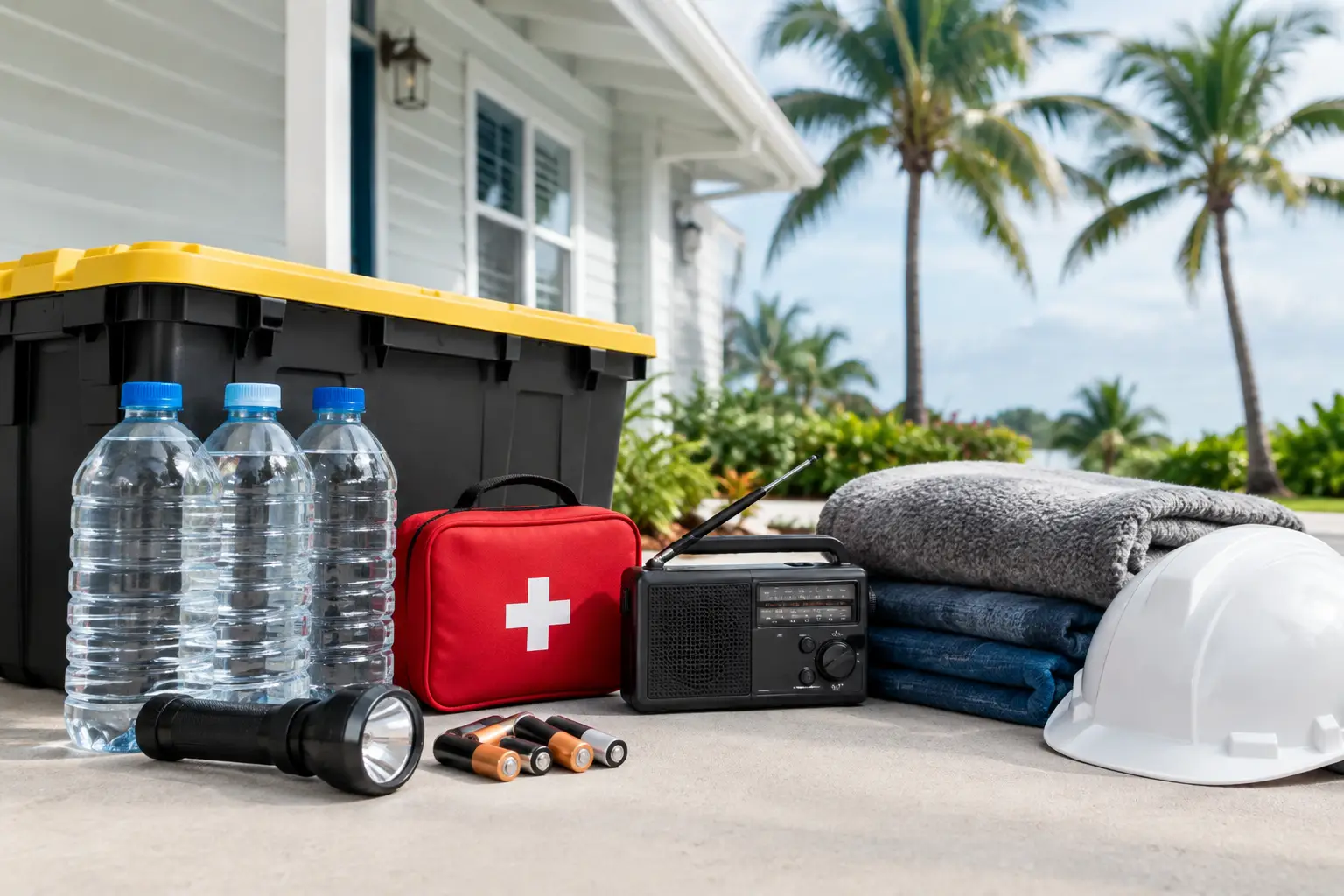
Store LED flashlights, headlamps, extra batteries, battery-powered lanterns, and a power bank for each key decision-maker or on-site manager. Headlamps are especially useful during inspections because they leave both hands free for opening panels, taking photos, moving debris, or carrying supplies. Keep these items in a labeled waterproof tote, not scattered across drawers.
A generator can be valuable for a single-family rental, office, or maintenance staging area, but it brings real safety and operating considerations. It must be used outdoors, well away from doors, windows, and vents. Never run a portable generator in a garage, breezeway, storage room, or enclosed patio. Carbon monoxide can build up quickly and become fatal.
If a generator will support hardwired equipment, use a properly installed transfer switch or inlet setup. Plugging a generator directly into a wall outlet can backfeed power lines and endanger utility workers. Fuel should be stored in approved containers, rotated according to its shelf life, and kept away from ignition sources. For some properties, a battery backup for essential communications and a professional generator plan is safer and more useful than buying a portable unit without a clear operating procedure.
Keep Water, Sanitation, and First Aid on Site
Residents may need to shelter in place, and maintenance crews may need to work during limited service conditions. Every occupied property should have a basic supply of drinking water, shelf-stable food, manual can openers, first-aid materials, and sanitation items. For vacant rentals or commercial buildings, the focus may be less on food and more on supporting safe inspections and emergency repairs.
A well-stocked first-aid kit should include gloves, sterile dressings, adhesive bandages, antiseptic wipes, gauze, medical tape, and basic over-the-counter pain relief where appropriate. Add insect repellent, sunscreen, cooling towels, and electrolyte packets for Florida cleanup work. Heat stress is a real issue after the storm passes, particularly when crews are clearing yards, hauling wet materials, or working in buildings without air conditioning.
Keep heavy-duty trash bags, paper towels, disinfectant, hand sanitizer, work gloves, rubber boots, and disposable protective coveralls available. Standing water and wet building materials can contain sewage, bacteria, sharp debris, or mold. If floodwater enters a property, avoid treating cleanup as a simple mop-up job. Electrical hazards, contaminated water, and concealed structural damage may require professional evaluation.
Build a Practical Post-Storm Repair Kit
The hours after a storm are when a small, organized kit pays off. The goal is not to complete permanent repairs in unsafe conditions. It is to prevent further damage, secure the property, and collect clear information for owners, insurers, and contractors.
A useful repair kit should include these essentials:
- Heavy-duty work gloves, safety glasses, rubber boots, hard hats, and N95-style masks for basic debris and moisture-related protection.
- A utility knife, pry bar, hammer, screwdrivers, adjustable wrench, pliers, tape measure, cordless drill, charged spare batteries, and a basic assortment of screws and fasteners.
- Contractor bags, buckets, absorbent towels, a wet/dry vacuum, mop, squeegee, and fans for limited water removal and drying support.
- A moisture meter, infrared thermometer, and camera or smartphone with backup charging capability for documenting conditions.
- Caution tape, traffic cones, temporary fencing materials, and padlocks to keep residents and visitors away from unsafe areas.
A wet/dry vacuum and fans are helpful after a small, clean-water leak caught early. They are not enough for widespread flooding, sewage backup, or water that has soaked walls, insulation, cabinetry, or flooring. In those cases, fast mitigation and documented drying are more important than simply making the surface look dry.
Do Not Forget Exterior and Site Supplies
A storm plan often fails outside the building. Loose branches, clogged gutters, failing fences, unstable signs, unsecured dumpsters, and outdoor furniture can become damage sources before the storm even arrives.
Keep pruning tools, loppers, a rake, contractor bags, a chainsaw only if trained staff can operate it safely, and fuel or battery support for approved equipment. Remove dead limbs and low-hanging branches before they become an emergency. Clear gutters and downspouts, but do not perform ladder work in high winds or wet conditions.
For multifamily and commercial sites, add wheel chocks, barricades, cones, tarps for exterior equipment, and basic signage for closed entrances or slippery conditions. If the site has a pool, irrigation system, gate, elevator, or other specialized equipment, document shutdown procedures and identify the right vendor before an outage occurs.
Store Supplies Where They Can Actually Be Used
Supplies hidden in a remote shed, behind old tenant belongings, or in a locked office with one missing key are not reliable supplies. Use weather-resistant bins with plain labels such as "Roof and Water," "Power and Lighting," "First Aid," and "Cleanup." Keep an inventory sheet inside each bin and review it before hurricane season.
For a portfolio, standardize the kits across properties where possible. That makes it easier for a manager, maintenance technician, or approved vendor to find what they need without wasting time. Include property-specific information in a waterproof folder: utility shutoff locations, gate codes, equipment manuals, tenant contacts, insurance details, and a pre-storm photo checklist.
Photos matter. Take timestamped images of roofs, fences, exterior walls, landscaping, windows, and common areas before a storm. Afterward, photograph damage before cleanup begins when it is safe to do so. Clear documentation helps establish what changed, supports insurance conversations, and gives owners a factual record instead of a rushed verbal report.
Match the Kit to the Property and the Risk
There is no single shopping list that fits every property. A downtown office with impact windows has different needs than a rural rental with a well pump, mature trees, and a gravel drive. A vacation rental may need extra communication tools and turnover supplies, while an HOA may need cones, site maps, vendor contacts, and supplies for several common areas.
The most effective approach is to identify the property's likely failure points first. Ask where water enters during heavy rain, what happens when the power fails, which trees or exterior items present a risk, and who can authorize repairs if the owner is unreachable. Then stock supplies for those conditions rather than buying random items at the last minute.
For owners who do not have time to build, inspect, and restock a storm plan across multiple properties, R&M Services can help identify maintenance issues before they turn into storm damage and coordinate repairs when conditions allow. A prepared property is easier to protect, easier to document, and faster to return to normal operation.
The right supplies will not stop a storm. They give you a better chance to control what happens next: less water inside, fewer safety risks, clearer records, and a property that can be secured and repaired without unnecessary delay.