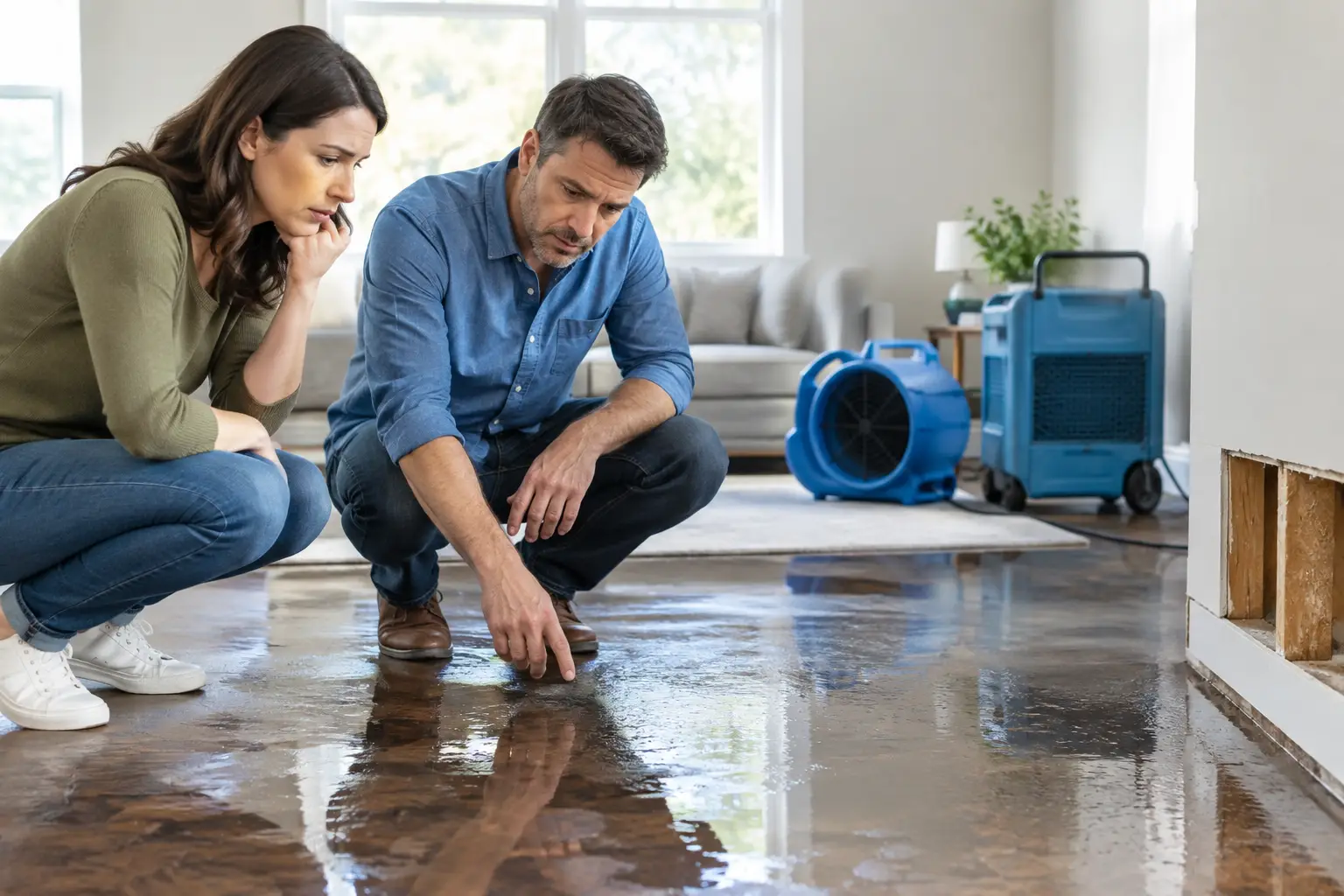
A tenant calls about water coming through a ceiling at 10:30 p.m. A supply line leaks beneath a vacant unit's sink. Heavy rain finds a roof weakness and soaks insulation before anyone notices. In each case, water damage recovery is not just about repairing what looks wet. It is about stopping the source, protecting people, documenting the loss, drying hidden materials, and getting the property back to normal without creating a larger problem behind the walls.
For owners and managers, the first few hours set the tone. Delayed action can turn a manageable plumbing repair into damaged flooring, swollen drywall, mold growth, tenant displacement, and extended vacancy. Fast response matters, but so does following the right order.
Start With Safety and Stop the Water
Do not begin by moving furniture or pulling up flooring if there is an active electrical hazard. If water is near outlets, appliances, electrical panels, or ceiling fixtures, shut off power to the affected area when it is safe to do so. Keep tenants and staff away from sagging ceilings, standing water near electrical equipment, and areas where flooring has become unstable.
Next, stop the source. Shut off the local fixture valve for a toilet, sink, or appliance line if the leak is isolated. If the source is unclear or the leak is substantial, turn off the building's main water supply. For roof leaks during a storm, the immediate objective is containment: protect contents, collect dripping water, and limit spread until the roof can be safely assessed.
This step is where a dependable maintenance contact saves time. Owners should not have to call a plumber, then a roofer, then a cleanup crew, then someone else to rebuild the damaged area. The goal is one accountable response that identifies the source, coordinates the necessary trades, and keeps the owner informed.
Document Before Water Damage Recovery Moves Forward
Once the immediate hazard is controlled, document the affected areas before major cleanup begins. Take clear photos and video of the source, standing water, damaged finishes, personal property, ceilings, walls, flooring, and any visible staining. Include wide shots that show the room and close shots that capture details.
For rental and commercial properties, record the date and time the issue was reported, who reported it, when the water was shut off, and what emergency measures were taken. This creates a clean service record for insurance discussions, tenant communication, owner reporting, and future maintenance planning.
Documentation should be factual. Avoid guessing at the cause or promising a repair timeline before the property has been inspected. A ceiling stain may come from a roof penetration, a drain line, a failed HVAC condensate line, or a leak from the unit above. The visible damage does not always point to the true source.
If an insurance claim may be involved, contact the carrier promptly and follow its reporting instructions. Emergency work to prevent additional damage is often necessary, but keep invoices, photos, moisture readings, and repair notes organized. Good documentation helps show that the property was protected rather than neglected.
Remove Water, Then Verify the Drying
Water extraction should begin as soon as the source is stopped. The right method depends on the amount of water, the materials involved, and how long moisture has been present. A small, clean-water leak caught quickly may require limited extraction and drying. Water that has traveled under flooring, soaked insulation, entered wall cavities, or sat for days requires a more thorough approach.
Fans alone are not a recovery plan. They can move air across a surface, but they do not confirm that subflooring, drywall, insulation, cabinets, or framing are dry. Professional moisture detection is what separates a cosmetic cleanup from a proper recovery. Materials can look dry while moisture remains trapped behind baseboards or beneath vinyl plank flooring.
Controlled drying typically involves extraction, air movement, dehumidification, and repeated moisture checks. In some cases, baseboards, sections of drywall, insulation, or flooring must be removed to allow the structure to dry. That can feel disruptive, especially when the affected space is occupied, but leaving wet material sealed in place can create more costly work later.
The trade-off is simple: selective removal can increase the immediate repair scope, while incomplete drying can lead to odor, deterioration, and possible mold conditions that delay re-occupancy. The right decision depends on the water source, affected materials, and measured moisture levels, not just appearance.
Clean Water Is Not Always Clean for Long
A leak from a supply line is generally less contaminated than water from a sewage backup or an overflowing toilet. But even clean water becomes a bigger concern after it sits, moves through building materials, or mixes with dirt and debris. Category and exposure time affect what can be safely dried, cleaned, or should be removed.
Sewage-related water and other contaminated sources require a higher level of containment and sanitation. Do not ask tenants to clean it themselves, and do not treat it like a routine mopping job. Protecting occupants and workers comes first.
Find the Damage You Cannot See
The most expensive water damage is often concealed. Water follows gravity, framing, plumbing penetrations, and floor assemblies. A leak on the second floor may show up as a small stain below while spreading much farther across the ceiling cavity.
During an inspection, check adjacent rooms, the level below, closets, cabinet bases, HVAC equipment, insulation, and exterior wall areas. Look for soft drywall, lifted flooring, swelling at trim, peeling paint, musty odors, buckled baseboards, and doors that suddenly stick. These are signals, not a complete diagnosis.
A property with repeated leaks needs more than another patch. If a bathroom has leaked several times, investigate aging supply lines, failing shutoff valves, poor caulking, loose toilet seals, damaged tile grout, drain issues, or improper ventilation. Repeating the same repair without addressing the cause is how small maintenance issues become a pattern of resident complaints and preventable turnover costs.
Communicate Clearly With Tenants and Stakeholders
Residents need practical information: whether water use is limited, which areas are off limits, when technicians will arrive, and what they should do with belongings. They do not need vague updates or promises that cannot be kept.
For owners, communication should answer a different set of questions. What caused the loss? Is the source stopped? How extensive is the damage? Is the unit habitable? What work is happening now, and what decisions are still pending? Photo documentation and plain-language updates make it easier to approve work without being on site.
For HOA boards, commercial operators, and multi-unit owners, response coordination matters just as much. Water may cross unit boundaries, affect common areas, or involve multiple parties. Clear records help establish the timeline and prevent confusion over who handled what.
Repair Only After the Area Is Dry
Rebuilding too early is a common mistake. New drywall, flooring, paint, or cabinetry installed over wet materials can trap moisture and force the work to be redone. Before reconstruction starts, verify that affected structural materials have returned to acceptable dry conditions.
Then prioritize repairs in the order that restores function and protects the asset. Plumbing or roof corrections come first. Electrical safety issues, damaged ceilings, flooring hazards, and compromised walls follow. Cosmetic work such as paint should be the final stage, not the first response.
This is especially important during a tenant turnover. A fast paint-and-patch job may make a unit look ready for a showing, but hidden moisture can disrupt a new lease weeks later. A properly completed recovery protects rental income better than a rushed surface repair.
Prevent the Next Water Event
No property can eliminate every water risk, especially in Central Florida storms, but regular maintenance reduces the chances of a major loss. Inspect supply lines and shutoff valves, service HVAC condensate drains, check roof penetrations, clean gutters where applicable, monitor water heaters, and address slow drains or recurring toilet issues before they fail.
Vacant properties deserve extra attention. A quick inspection can catch a running toilet, leaking appliance line, or HVAC drain issue before water has time to travel. For landlords with multiple units, recurring inspections and a clear emergency reporting process are often less expensive than one major after-hours loss.
R&M Services helps owners throughout Ocala, Dunnellon, and Marion County coordinate emergency repairs, identify the source of water intrusion, document the work, and complete the repairs needed to return a property to service. The best time to plan for water damage is before the call comes in, but the next best time is the moment you see the first sign of moisture.