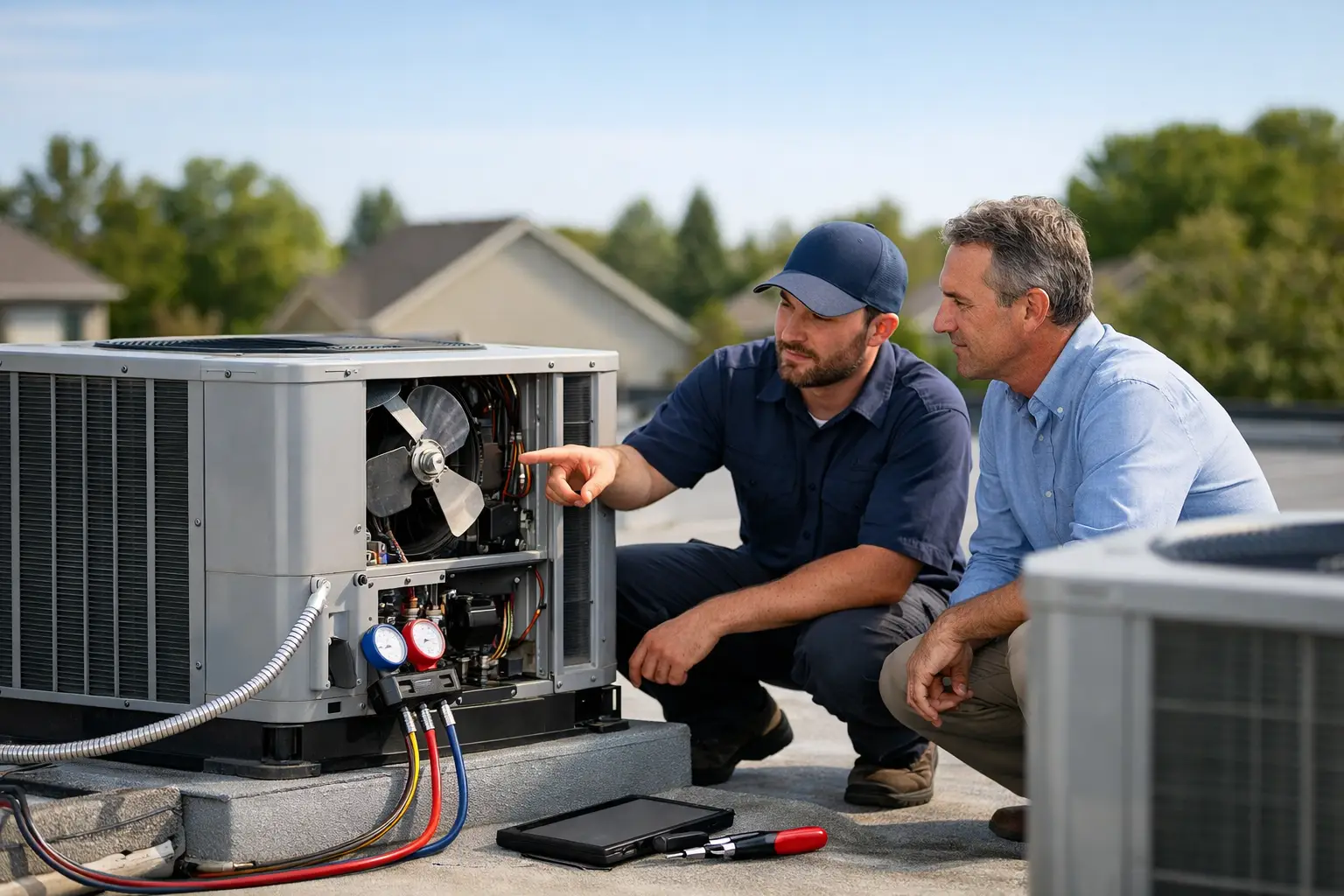
An HVAC system that fails in the middle of a Florida summer is not just an inconvenience. It is a habitability concern, a tenant relations problem, and a potential legal issue all at once. Landlords who wait for a complete breakdown before acting often face emergency replacement costs, urgent contractor scheduling, and tenants who are frustrated by a problem that seemed avoidable. Knowing when to replace rather than repair puts property owners in control of the decision instead of reacting to a crisis.
The question of when should landlords replace HVAC systems does not have a single answer, but it does have clear signals. Age, repair history, efficiency loss, and the cost of repeated service calls all factor into the math. For rental properties in Marion County and across Florida's Tri-County area, the climate adds extra pressure to that calculation. Understanding how to read those signals helps owners make decisions that protect both tenants and cash flow.
When Should Landlords Replace HVAC Instead of Repairing It?
Repair versus replacement is not always obvious from a single service call. A failed capacitor or a clogged drain line is a minor repair that does not suggest replacement. But when the same system requires multiple service visits per year, that pattern changes the financial equation significantly. At some point, each repair becomes a short-term patch on a system that will need replacement anyway, and the cost of those repairs begins to rival the cost of a new unit.
A common benchmark used in property maintenance is the 50 percent rule: if a repair costs more than 50 percent of the price of a new system, replacement is usually the better investment. This is especially true for systems more than 10 years old, where efficiency losses and increased failure rates make continued repairs less financially defensible. A new system with a manufacturer warranty typically costs less over a five-year horizon than continued patching of an aging unit.
The repair history matters more than one service call
Landlords who track maintenance records have a significant advantage here. If a system has had two or three service calls in the past 18 months, each one is worth more than the individual invoice. Taken together, they tell a story about whether the system is in steady decline. An HVAC system that is replaced after a major component failure is often one that had warning signs in the service record going back a year or more.
Keeping a log of every service call, the part replaced, and the cost makes this pattern visible before it becomes a crisis. If that log shows a system with a blower motor replaced in spring, a refrigerant recharge in summer, and a failing contactor in fall, a landlord reviewing those records should already be budgeting for replacement rather than scheduling a fourth repair call.
Major component failures change the math
Not all HVAC repairs are created equal. Replacing a filter, cleaning coils, or fixing a condensate drain line is routine maintenance that extends system life. Replacing a compressor, heat exchanger, or evaporator coil is a major repair that often costs a substantial fraction of a new system's price. When a major component fails in a system that is already older than 10 to 12 years, replacement is almost always the right answer. The remaining components on an aging system are likely to follow, and the new major component does not extend the system's overall life proportionally.
Warning Signs an HVAC System Is Nearing Replacement
Some HVAC problems show up on a service call. Others show up in how tenants use or describe the unit over time. Landlords who stay connected to their property's HVAC performance - either through tenant feedback, annual inspections, or regular maintenance visits - are more likely to catch these signs before a failure forces a decision.
Common warning signs that a rental HVAC system is approaching end of life include:
- The system is 12 or more years old and has required two or more repairs in the past two years
- Tenants report that the unit runs constantly but cannot keep up with the thermostat setting
- Energy bills at the property are noticeably higher than expected for the unit size
- The system uses R-22 refrigerant, which is no longer manufactured and is expensive to source
- Unusual noises such as grinding, rattling, or banging from the indoor or outdoor unit
- Visible rust, corrosion, or deterioration on the coils, cabinet, or refrigerant lines
- Humidity problems inside the home even when the system appears to be running normally
- The system short-cycles - turning on and off frequently without completing a full cooling or heating cycle
Any one of these signs is worth a professional evaluation. Multiple signs together, particularly in a system past its expected lifespan, are a strong indicator that replacement planning should begin. A thorough rental property inspection checklist should include HVAC condition as a standard item to track at each evaluation.
Why Florida Rentals Need a Different Replacement Timeline
Standard HVAC lifespan estimates of 15 to 20 years come from climates where systems run seasonally. In Florida, air conditioning runs nearly every month of the year. Summer temperatures push systems to maximum output for five to six months straight. High humidity forces the system to work constantly as a dehumidifier in addition to a cooler. Salt air near coastal areas accelerates corrosion on coils and electrical components. These factors compress the realistic useful life of an HVAC system to 10 to 14 years for many Florida rentals.
This means landlords in Marion County, Citrus County, and Levy County should not use national average lifespan tables as their primary planning tool. A 12-year-old system in a Florida rental has experienced conditions equivalent to what a system in a northern climate faces at 18 or more years of age. Adjusting replacement expectations to account for Florida's climate reduces the risk of being caught unprepared by a system failure that was actually predictable.
Seasonal HVAC maintenance is especially important in this environment. Consistent filter changes, coil cleaning, and refrigerant level checks help extend system life and catch declining performance before it becomes a tenant emergency. A seasonal HVAC maintenance checklist for rentals gives landlords a repeatable framework to stay ahead of these issues throughout the year.
Replace Before a Turnover When the Numbers Support It
One of the best windows for HVAC replacement is during a property vacancy. With no tenant in place, scheduling is flexible, work can proceed without disrupting daily life, and the property can be properly cleaned and tested before the next lease begins. A new system installed at turnover also serves as a genuine selling point for prospective tenants who are choosing between comparable properties.
If a system is 10 or more years old and showing any signs of decline, a turnover is a natural checkpoint to evaluate whether proactive replacement makes more sense than handing a known liability to the next tenant. A tenant who experiences an HVAC failure in their first summer is less likely to renew their lease, and an emergency replacement mid-lease is almost always more expensive and more disruptive than a planned one at turnover.
For landlords preparing a vacant unit, evaluating HVAC condition should be a standard part of the process. A full evaluation during a vacant rental preparation includes checking the system's age, reviewing the repair history, testing performance, and making a documented recommendation before the property is listed as rent-ready.
Choose the Right Replacement, Not Just the Fastest One
When a decision is made to replace an HVAC system, the instinct is often to move quickly, especially if the unit is already down or a tenant is uncomfortable. But the replacement decision deserves some care even under time pressure. Installing the wrong size system creates new problems that can persist for the life of the equipment.
An oversized unit cools a space quickly but does not run long enough to remove humidity from the air. In Florida, this results in a home that feels cold but clamped and damp, with mold risk increasing over time. An undersized unit runs constantly without reaching the thermostat set point, wears out faster, and frustrates tenants who cannot understand why the system seems to be running all day without making the home comfortable.
Proper sizing requires a load calculation performed by a licensed HVAC contractor. That calculation accounts for the home's square footage, ceiling height, insulation levels, window placement, and Florida's climate data. It takes more time than simply swapping in a unit of the same nominal size, but it produces a result that performs correctly for years rather than creating callback complaints from the first week.
Efficiency rating also matters. Higher SEER-rated systems cost more upfront but consume less electricity, which matters for tenant satisfaction in a lease that includes utilities, and for property value in general. Matching the efficiency level to the property's expected tenure and rental market positioning is part of a sound replacement decision.
Build HVAC Replacement Into Your Property Plan
The landlords who handle HVAC replacement most smoothly are the ones who plan for it before it becomes urgent. This means tracking the installation date and service history of every system across a portfolio, setting a realistic expected replacement window based on Florida conditions, and budgeting for that replacement as part of annual property financial planning.
A system that was installed in 2015 should be on a landlord's radar by 2025 as a likely replacement candidate within the next two to four years. That window allows for comparison shopping on equipment, getting multiple contractor quotes, timing the replacement at an ideal point such as the next turnover, and avoiding the cost premium that comes with emergency scheduling.
Property owners who integrate HVAC planning into their broader preventive maintenance approach consistently spend less on reactive repairs and experience fewer mid-lease emergencies. They also build better relationships with tenants because comfort is maintained proactively rather than restored after a failure. This kind of structured approach to property care is what separates owners who grow their portfolios from those who spend most of their energy managing crises.
Whether you manage one rental home or several units across Marion County and the surrounding area, treating HVAC replacement as a planned expense rather than a surprise event is one of the highest-value habits a landlord can develop. The cost of a well-timed replacement is predictable. The cost of an emergency failure - in contractor fees, tenant dissatisfaction, and potential habitability exposure - almost always exceeds it.