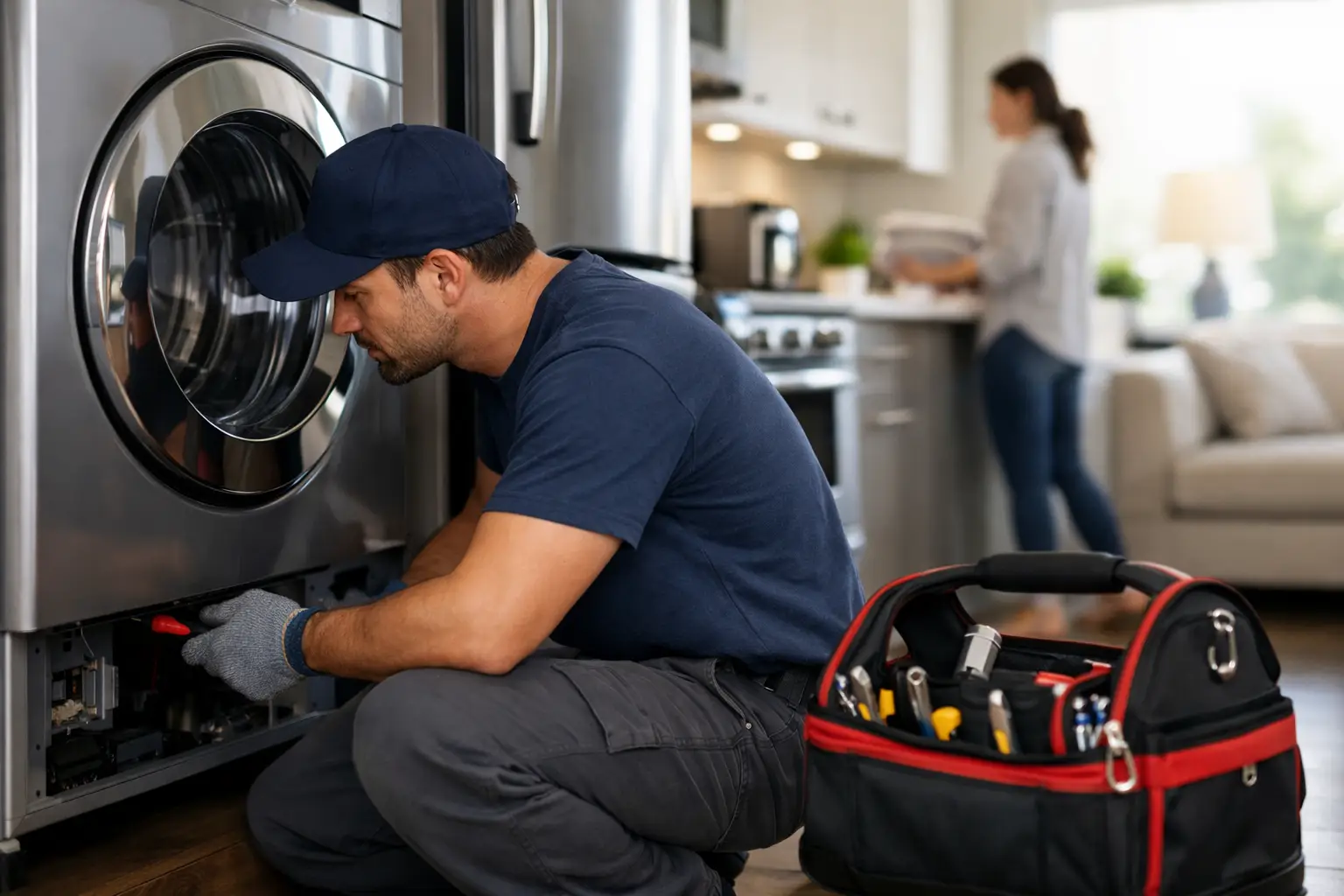
A refrigerator that quits on a Friday afternoon is not a minor inconvenience for a tenant. It can mean spoiled food, an urgent maintenance call, an unhappy resident, and a landlord scrambling to find a qualified technician. Consistent appliance maintenance for rentals helps prevent that chain reaction before it starts.
For owners across Ocala, Dunnellon, and Marion County, appliances are part of the rental's working infrastructure. A dependable range, refrigerator, dishwasher, washer, dryer, and garbage disposal support tenant satisfaction and protect the property's value. When those systems are neglected, small performance issues can turn into expensive replacements, water damage, or a vacancy that lasts longer than it should.
Why Appliances Fail at the Worst Time
Most appliance breakdowns do not begin as sudden failures. They begin with warning signs: a refrigerator running constantly, a dryer taking two cycles to finish a load, a dishwasher leaving standing water, or a washing machine making a new noise during spin cycles. Tenants may not recognize these signs as maintenance concerns, especially if the appliance still technically works. By the time they submit a request, the problem may be more advanced.
Rental properties add another layer of wear. Different residents use appliances differently, and turnover periods can hide problems behind a quick cleaning. An appliance may look presentable while a clogged dryer vent, worn water supply hose, dirty condenser coil, or failing door seal is already reducing performance.
Florida's heat and humidity can also add stress. Refrigerators and freezers work harder in warm kitchens and garages. Moisture can contribute to corrosion around water connections and under appliances. For vacation rentals or units that sit vacant for part of the year, an unnoticed leak or malfunctioning ice maker can create damage long before anyone walks through the door.
The goal is not to repair every older appliance before it fails. The goal is to identify what needs attention, document its condition, and make a practical repair-or-replace decision before the issue disrupts occupancy.
A Practical Appliance Maintenance Plan for Rentals
A good maintenance plan follows the property's rhythm. Some tasks belong in routine inspections, others belong in tenant turnover work, and a few need immediate action whenever a resident reports a change in performance.
Start With a Condition Baseline
When acquiring a rental, completing a turnover, or taking over management of an occupied unit, document each appliance. Record the make, model, approximate age, visible condition, and basic operating status. Test burners, oven functions, refrigerator temperature, dishwasher cycles, washer operation, dryer heat, and disposal performance.
Photos matter here. A photo record helps establish the appliance condition at move-in, supports accountability during a future turnover, and gives the maintenance team a reference point when an issue is reported. It also prevents guesswork about whether an appliance was already damaged, missing a shelf, or showing signs of a prior leak.
If an appliance is nearing the end of its expected service life, flag it for planning rather than waiting for an emergency replacement. A landlord with a replacement plan can compare options, schedule delivery, and avoid paying more for a rushed decision.
Handle the High-Risk Maintenance Items
Not every task needs a service call, but a few items deserve consistent attention because the cost of neglect is high. Dryers, dishwashers, washing machines, and refrigerators should be priority equipment in every rental maintenance program.
Dryer vent cleaning is a safety and performance issue. Lint buildup restricts airflow, makes the dryer work harder, increases utility use, and can create a fire risk. A dryer that takes too long to dry clothes should not be treated as a tenant inconvenience. It needs an inspection of the lint path, vent connection, and exterior termination.
Washing machine hoses should be inspected for cracks, corrosion, looseness, or bulging. A failed supply hose can release a significant amount of water in a short time, affecting flooring, baseboards, adjacent units, and ceilings below. Replacing aging hoses is far less expensive than repairing water damage.
Dishwashers deserve attention at the door gasket, drain line, supply connection, and area beneath the unit. A small drip can go unnoticed until it damages cabinetry or subflooring. Check that the appliance drains correctly and that the door closes and seals properly.
For refrigerators, clean accessible condenser areas as appropriate for the model, inspect door gaskets, verify stable temperatures, and check water lines and ice maker connections for leaks. A weak door seal lets warm air in and forces the refrigerator to run longer. That increases wear while raising the chance of food loss if the unit cannot maintain temperature.
Make Turnovers Do More Than Look Clean
Turnover is the best time to inspect appliances without disrupting a resident's schedule. It is also where many owners lose money by focusing only on paint, flooring, and visible cleaning. A unit can look rent-ready while a dryer vent is blocked or the dishwasher is one cycle away from failure.
During a turnover, run every included appliance through a basic test. Do not simply turn it on. Let the dishwasher fill and drain. Test the oven at operating temperature. Check every burner. Run the washer through a cycle and verify that the dryer heats and vents properly. Inspect behind and beneath equipment where practical for evidence of leaks, pests, damaged cords, or loose connections.
This is also the right time to remove abandoned lint, food debris, and residue that can cause odor complaints or attract pests. Clean appliance interiors, replace damaged drip pans or worn seals when needed, and confirm that controls and knobs operate safely. A clean, tested appliance gives the next tenant a better move-in experience and reduces avoidable service calls in the first month of a lease.
Repair or Replace: Make the Decision Before It Becomes Urgent
Owners often ask whether an appliance should be repaired or replaced. The honest answer is that it depends on age, condition, repair cost, parts availability, energy use, and the appliance's role in the unit.
A simple repair on a newer appliance usually makes sense, particularly when the machine is otherwise in good shape. Replacing a gasket, drain pump, heating element, hose, thermostat, or latch can restore reliable operation at a reasonable cost. But repeated failures on an older unit deserve a different calculation. Paying for several service calls over a few months can cost more than installing a dependable replacement with a warranty.
Consider the tenant impact as well. A malfunctioning dishwasher may be manageable for a day or two. A refrigerator, range, or in-unit washer and dryer can be more urgent, depending on what the lease includes and the property's tenant profile. For a higher-end rental or vacation property, long downtime can affect reviews, renewals, and income more quickly.
Standardizing appliance brands and models across a portfolio can also make maintenance easier. It may simplify replacement parts, technician familiarity, and tenant instructions. That said, standardization should not force an owner to replace a functioning appliance early. Use it as a purchasing strategy when replacement is already justified.
Give Tenants Clear Instructions Without Shifting the Burden
Tenants should know how to report appliance problems early. Encourage them to report leaks, burning smells, unusual noises, poor cooling, drainage issues, or repeated cycle failures as soon as they notice them. Early reporting protects the resident and the property.
Provide basic use expectations at move-in. Residents should clean dryer lint filters after each load, avoid overloading washers, avoid putting grease or hard food waste into disposals, and report water around appliances immediately. These are reasonable operating guidelines, not a substitute for professional maintenance.
Avoid telling tenants to take apart appliances, move heavy units, or diagnose electrical problems. That can create safety risks and make damage worse. The right process is simple: the tenant reports the issue, the owner or property manager coordinates a qualified response, and the completed work is documented.
One Team, Clear Documentation, Faster Decisions
The biggest maintenance problem is often not the appliance itself. It is the coordination. Owners lose time chasing separate vendors, waiting for callbacks, and trying to understand whether a repair was completed correctly.
A local maintenance partner can handle inspection, troubleshooting, repair coordination, replacement preparation, and turnover testing through one accountable point of contact. R&M Services helps Marion County property owners manage appliance issues alongside plumbing, electrical, HVAC, and make-ready work, so one repair does not become a week of scheduling conflicts.
Ask for clear documentation after service: what was found, what was repaired, what parts were used, whether there are remaining concerns, and photos when they add value. This information helps owners approve work quickly, track repeat issues, and make better replacement decisions over time.
A rental appliance does not need to be new to be dependable. It needs regular attention, quick response when something changes, and an owner who treats maintenance as protection for the property and the people living in it.