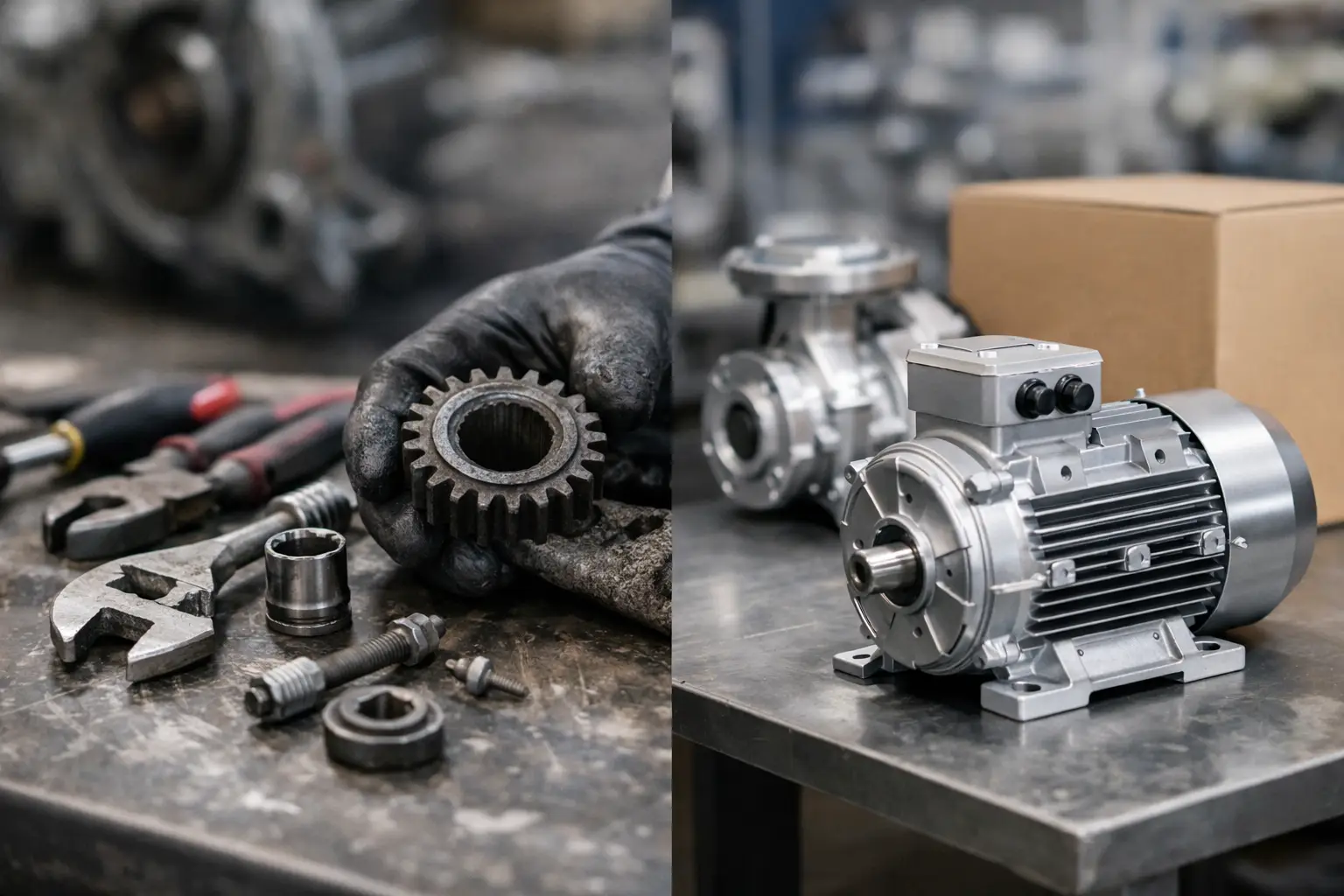
Property owners face a recurring challenge when equipment fails: should they repair or replace? The answer is rarely obvious from the invoice alone. It requires looking at the full picture, including how long the repair will hold, what the disruption costs, and where the property is headed over the next few years. Making these decisions well separates owners who control their maintenance budgets from those who react to one crisis at a time.
The following sections break down each factor that should shape the decision, from initial cost comparisons to safety obligations, equipment age, and how planning around lease cycles gives owners more leverage over both cost and timing.
Cost Goes Deeper Than the Repair Estimate
Property owners face a recurring challenge when equipment fails: should they repair or replace? The answer requires looking beyond the immediate invoice. The repair estimate matters, but it is only one part of the decision. Owners should also account for lost rent, business interruption, repeat service calls, temporary accommodations, utility waste, and the staff time spent coordinating the issue. A $400 repair on a unit that costs $60 per day in vacancy becomes a different calculation when the repair takes five days and the replacement could have been done in two.
Comparing only the repair cost to the replacement cost misses the full financial picture. Every day a unit sits unavailable because a part is on back order, a technician cannot schedule a return visit, or the repair failed and needs to be redone is a day that generates expense without generating income. Owners who account for those downstream costs consistently make better decisions than those who focus only on what the technician charged.
Utility costs are another hidden factor. Aging HVAC equipment that is technically functional may be running at 30 to 40 percent lower efficiency than a modern replacement. That gap shows up in every month's electric bill. Over a year or two, the efficiency savings from a new system can offset a meaningful portion of the replacement cost, particularly in a Central Florida climate where air conditioning runs most of the year.
Repair History Tells the Real Story
A single failure typically warrants repair, but recurring problems signal that replacement may be more economical long-term. Tracking dates, symptoms, and costs transforms subjective decisions into defensible business choices. When the same water heater, HVAC unit, or appliance has required three service calls in twelve months, the pattern usually points toward replacement. Without records, owners make the same repair call each time and never see the total picture until the equipment fails completely at the worst possible moment.
Documenting repair history does not require complex software. A simple log with the date, the reported problem, the technician's diagnosis, the cost, and the parts replaced gives you the data needed to see whether you are maintaining a functioning system or subsidizing a failing one. That distinction matters enormously when a technician presents a repair estimate for the fourth time on the same piece of equipment.
Repair history also protects owners in disputes. If a tenant or a vendor claims that a system was neglected, documented service records demonstrate that maintenance was performed and what was found at each visit. That record becomes relevant during lease renewals, property sales, insurance claims, and any situation where the condition of equipment is in question.
Safety Issues Demand Priority
Electrical hazards, gas concerns, structural damage, and persistent moisture should never be deferred purely for budget reasons. A faulty outlet or aging gas line may seem like a minor repair item, but the liability exposure far exceeds the cost of proper resolution. When a safety concern surfaces during a routine inspection or tenant report, the decision framework shifts immediately. The question is no longer whether the repair is cost-effective but whether the property is safe to occupy. Licensed professionals should evaluate and document the condition before any decision is made.
This is not only a legal obligation. It is a practical one. Properties that have safety deficiencies and later experience an incident face consequences that no repair savings could have offset. Documentation of the known condition, combined with a failure to act, creates a liability position that extends well beyond the cost of remediation. Acting promptly when safety concerns surface is both the right thing to do and the financially sound choice.
Persistent moisture deserves particular attention because it rarely stays contained. A slow leak behind a wall, a failed pan under an HVAC unit, or water intrusion around a window frame can quietly produce mold over weeks or months. By the time it is visible, remediation often requires opening walls, replacing insulation, treating framing, and addressing the cause. The cost of intervening early when the source is identified is almost always lower than addressing the full cascade of damage that follows.
Equipment Age and Parts Availability
Older systems with discontinued parts or poor efficiency become less viable repair candidates, while newer equipment with isolated failures usually merits fixing. A fifteen-year-old HVAC system with a compressor failure may technically be repairable, but the cost of the compressor, the age of the remaining components, and the energy savings of a modern unit often make replacement the better long-term investment. Availability matters too. If a part requires a special order and a two-week wait, the owner is paying vacancy costs or dealing with uncomfortable tenants during the delay.
Most mechanical equipment follows a predictable curve. In the first few years, failures are uncommon and repairs are straightforward because parts are available and technicians are familiar with current models. In the middle years, the equipment runs reliably with routine maintenance. In the final years, failures become more frequent, parts become harder to source, and each repair carries a higher risk of triggering another failure in an adjacent component.
Knowing where a piece of equipment sits on that curve helps owners anticipate rather than react. An HVAC unit at year twelve in Florida has typically provided most of its useful service life. Planning for replacement during the next between-tenant period, rather than waiting for a mid-summer failure, gives the owner control over timing, vendor selection, and cost. That planning is not possible without tracking equipment age alongside repair history.
Timeline and Property Use Matter
The property's intended use affects the decision. Long-term owners benefit from reliable systems and lower maintenance frequency, while those preparing to sell should address inspection defects without over-upgrading. Between-tenant periods offer ideal replacement windows with minimal disruption. Planning replacements around lease cycles, seasonal demand, and vendor availability gives owners more control over timing and cost. Reacting to failures during peak rental season or during a tenant's occupancy limits options and increases expense.
An owner who plans to hold a property for another ten years and an owner who is preparing for a sale in six months face genuinely different calculations. The long-term holder benefits from investing in a system that will run reliably and efficiently for years. The owner approaching a sale may prioritize addressing defects that will appear on a buyer's inspection without installing upgrades that will not be captured in the sale price.
Commercial properties introduce additional considerations. Business operations depend on reliable equipment in ways that residential tenants do not. A failed HVAC system in a retail space or office may force temporary closure. A broken compressor in a food-service facility can result in spoiled inventory. These costs are not hypothetical and should be part of any replacement evaluation for commercial assets.
The Danger of Deferring Decisions
Deferring decisions often costs more than addressing problems promptly. Minor issues compound: a roof leak becomes mold, a plumbing drip damages multiple rooms, a struggling HVAC unit burns out a compressor. Early inspection preserves choices while total failure eliminates them. The strategic approach compares realistic outcomes over one to three years, balancing immediate costs against operational reliability and tenant satisfaction. Owners who document conditions, track repair history, and work with a team that understands both repair and replacement options make better decisions and spend less over time.
Deferral is not always intentional. Sometimes owners simply do not have the information they need to recognize that a pattern is developing. A tenant calls about a leak, it is patched, and the ticket is closed. Three months later a different tenant reports a similar issue in the same area, and the patch is repeated. Without a system connecting those records, the pattern is invisible. With documented history, the recurrence is clear and the owner can make an informed decision about what the property actually needs.
The most expensive repairs are almost always the ones that could have been addressed earlier at lower cost. That is not hindsight. It is the predictable result of deferring action while conditions worsen. Building a habit of prompt assessment and clear documentation does not eliminate equipment failures, but it consistently reduces their cost and disruption.
How to Compare Repair and Replacement Options
Start with the current condition of the equipment, its age, and how many times it has needed service in the past two years. Get a realistic repair estimate that includes parts, labor, and any temporary measures needed during the repair. Then compare that against the installed cost of a replacement, the expected lifespan of the new equipment, and any efficiency gains. Factor in the disruption to tenants or business operations for each option. The right answer depends on the specific property, the owner's plans, and the reliability of the equipment in question. R&M Services & Property Management helps owners evaluate these decisions with clear documentation, honest assessments, and the ability to handle both repairs and replacements through one coordinated team.
A useful rule of thumb is the fifty percent rule: if the cost of a repair exceeds fifty percent of the replacement cost, and the equipment has already passed the midpoint of its expected life, replacement is usually the better choice. That threshold is a starting point, not a formula, and every situation requires judgment. But having a benchmark makes conversations with technicians more productive and helps owners avoid being pushed into expensive repairs on equipment that is near the end of its service life.
Working with a team that handles both repairs and replacements removes a common conflict of interest. A vendor whose only offering is repairs has little incentive to recommend replacement, and a replacement-focused contractor may not explore whether a repair would genuinely serve the owner's needs. A coordinated team that can perform either, and that documents conditions over time, is positioned to give owners honest guidance rather than advice shaped by which service generates more revenue.