Selecting appliances for a rental unit is not the same decision as outfitting a home you plan to live in. Tenant use patterns, maintenance access, parts availability, and replacement cost all carry more weight than convenience features or modern aesthetics. The wrong choices lead to repeated service calls, unhappy tenants, and premature replacement costs. The right choices quietly hold up for years with minimal attention.
For landlords managing rentals across Marion County and the surrounding Florida area, getting appliance selection right from the start saves money and reduces the kind of friction that drives tenant complaints and turnover.
Durability and Serviceability Over Features
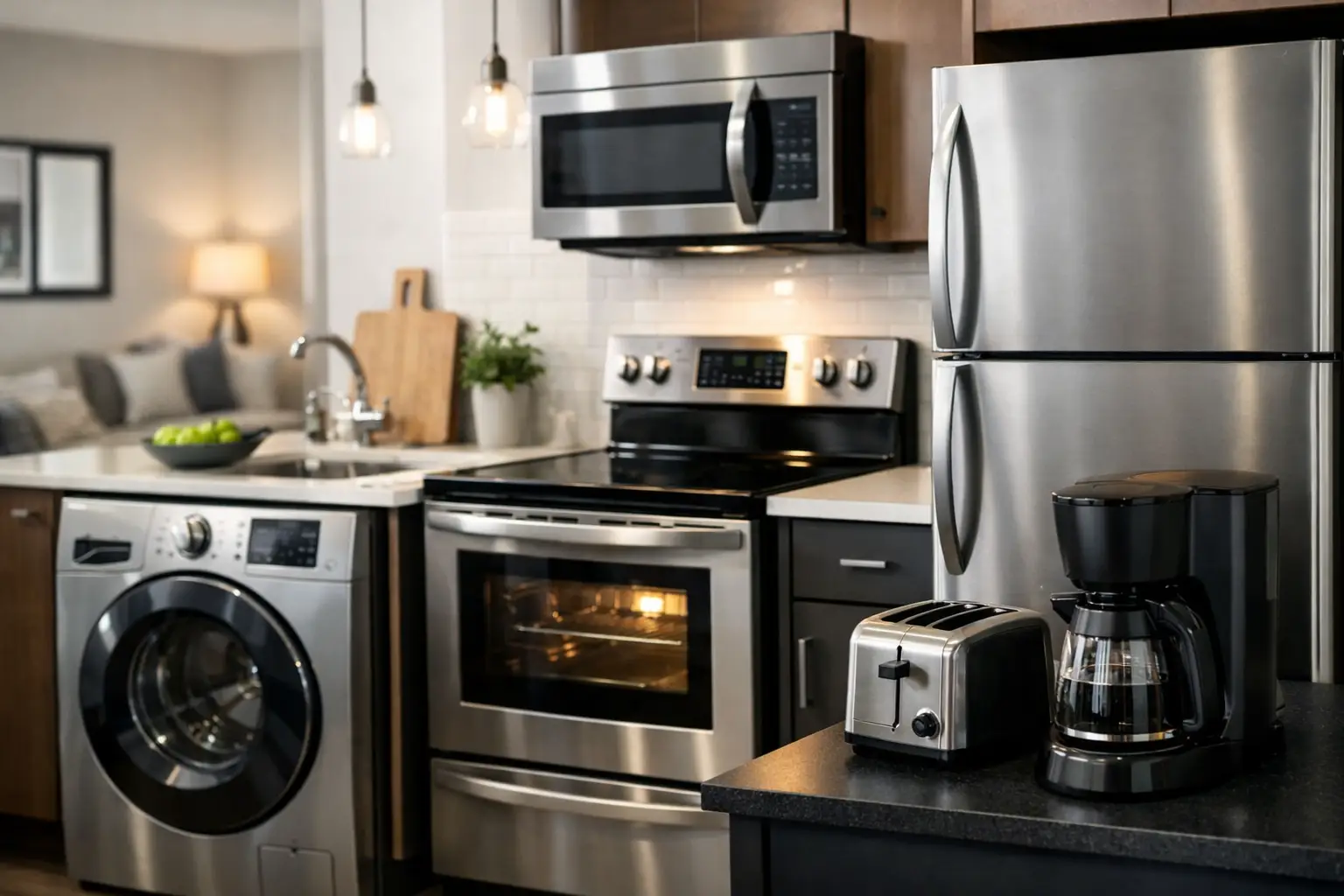
Landlords should prioritize durability and serviceability over cost or features when selecting rental appliances. The focus should be on equipment that withstands tenant use, has readily available parts, and fits the property correctly. Premium features that appeal to homeowners often create more maintenance problems in rental settings. A smart refrigerator with a touchscreen adds cost and complexity without improving the tenant experience in a meaningful way. The best rental appliances are reliable, easy to service, and available from suppliers who can deliver replacements quickly when needed.
Refrigerators for Rental Properties
Top-freezer models or basic French-door designs work best for most rental units. Door dispensers, especially those for ice and water, add convenience but create more potential failure points. Ice makers and water dispensers require water line connections that can leak, filters that need regular replacement, and mechanical parts that wear out faster than the rest of the appliance. For rentals, a simple top-freezer or bottom-freezer model with manual defrost or auto-defrost provides the longest service life with the fewest maintenance calls. Size the refrigerator to the kitchen space and avoid oversized models that create clearance problems.
Ranges, Dishwashers, and Kitchen Equipment
Standard electric ranges with coil or smooth-top cooktops are practical for most rental kitchens. Gas ranges require proper installation expertise and should not be treated casually. If the property has gas service and existing gas connections, a gas range can work well, but installation should always be handled by a qualified technician. Dishwashers in rental units should be basic built-in models with simple controls. Premium versions with numerous wash cycles and electronic displays add cost without improving reliability. Look for models with stainless steel tubs rather than plastic for better durability and quieter operation.
Washers, Dryers, and Laundry Considerations
Capacity should match the property type. A one-bedroom unit does not need the same washer capacity as a three-bedroom family rental. Top-load washers appeal to many tenants and are generally simpler to service. Front-load washers offer better water efficiency but require maintenance awareness in humid Florida climates. Front-loaders need regular door seal cleaning and occasional drum cleaning cycles to prevent mold and odor buildup. Dryers should be properly vented to the exterior, and dryer vents should be inspected during every turnover to prevent lint buildup and fire risk.
Microwaves and Small Appliances
Countertop microwave units offer simplicity and easy replacement. Over-the-range models work well for renovated kitchens but complicate installation and increase the cost of replacement. When a countertop microwave fails, the owner can replace it the same day for a reasonable cost. An over-the-range unit requires professional installation, proper venting, and often costs two to three times as much to replace. For most rental properties, a quality countertop microwave provides the best balance of convenience and maintainability.
Financial Strategy for Rental Appliances
Rather than buying the cheapest option, consider the lowest reasonable lifetime cost, including purchase, delivery, installation, maintenance, repairs, energy use, and lost time. A $50 savings on a cheap dishwasher that fails in eighteen months costs more than buying a mid-range model that lasts five years. Standardizing equipment across similar properties streamlines turnovers and maintenance familiarity. When every unit uses the same refrigerator model, the maintenance team knows the common failure points, stocks the right parts, and completes repairs faster. This approach also connects directly to sound repair versus replacement decisions when an appliance eventually ages out.
Turnover Appliance Inspections
Comprehensive inspections during every tenant turnover should test all appliance functions, check seals and connections, and identify potential issues before the next tenant moves in. Run each appliance through a full cycle, check door gaskets, inspect water connections, test temperature settings, and verify that all controls function properly. Catching a failing seal or a slow leak during turnover is far less expensive than an emergency call during the first week of a new lease. R&M Services & Property Management includes appliance inspections as part of every turnover service, helping owners catch issues early and make informed repair or replacement decisions. A thorough make-ready inspection checklist ensures nothing is missed before the next resident moves in.
Consistent appliance maintenance for rentals between tenancies extends equipment life, reduces emergency calls, and protects the quality of the unit at every stage of occupancy.