A smoke detector that chirps at 2 a.m. is a maintenance call. A smoke detector that was never tested, was painted over, or expired years ago is a property risk. For landlords, this rental smoke detector guide focuses on the part that often gets missed: building a repeatable system that keeps alarms working between turnovers, inspections, and resident requests.
Smoke alarms are small, inexpensive devices, but they deserve the same attention you give leaking supply lines, failing HVAC equipment, or damaged handrails. They help protect residents, reduce avoidable liability exposure, and keep a routine inspection from becoming a last-minute scramble.
Start With the Right Detectors in the Right Places
The first job is confirming that each rental has the correct alarm layout for its design and applicable code requirements. Do not assume every house needs the same setup. A single-family home built decades ago, a recently renovated condo, and a multi-unit building may have different requirements based on construction date, permit history, local enforcement, and the work performed during renovations.
In general, sleeping areas are the priority. Smoke alarms are commonly required inside each sleeping room, outside separate sleeping areas, and on each level of a dwelling, including a basement where one exists. Carbon monoxide alarms may also be necessary when a property has fuel-burning appliances, an attached garage, or other applicable conditions.
Placement matters as much as the device itself. An alarm mounted too close to a bathroom, kitchen, ceiling fan, HVAC supply vent, or cooking appliance can create nuisance alarms. Residents who deal with frequent false alarms may remove batteries or disable the unit entirely. Follow the manufacturer's installation instructions and the requirements that apply to the property rather than placing alarms wherever there is an open spot on the wall.
For owners in Ocala and throughout Marion County, a practical rule is simple: if a unit is being turned, renovated, or prepared for a new resident, verify the alarm layout before the keys change hands. It is easier to correct a missing device while painters, electricians, and maintenance crews are already on site.
Rental Smoke Detector Guide: Choose Equipment for Long-Term Reliability
Not every detector uses the same sensing method or power source. The right choice depends on the property, but the goal stays the same: dependable warning without creating maintenance headaches.
Photoelectric smoke alarms are generally better at detecting slow, smoldering fires. Ionization alarms tend to respond faster to flaming fires. Dual-sensor models combine both technologies, although they may cost more. For many rental owners, a quality photoelectric or dual-sensor alarm is a sensible choice, especially where nuisance alarms have been a recurring issue.
Power source is another decision. Hardwired alarms with battery backup are common in newer properties and are often required where systems already exist. If one interconnected hardwired alarm activates, the others can sound too, giving residents more notice throughout the home. These systems should be serviced carefully. Replacing a hardwired device with the wrong model can affect interconnection or code compliance.
Battery-powered units can be appropriate in existing properties where hardwiring is not required, but they demand stronger inspection habits. Sealed, long-life battery alarms reduce the chance of missing or removed batteries. They do not eliminate the need for testing, cleaning, or replacement at the end of the device's service life.
Check the date printed on every alarm. Many smoke alarms should be replaced after 10 years, even if the test button still works. The sensor can degrade over time, and a passing button test does not prove that the smoke-sensing component will perform properly in an emergency. Record the replacement date inside the unit or in your property maintenance log.
Make Testing Part of Operations, Not a One-Time Task
A working smoke detector program should not rely on a resident remembering to call or an owner happening to notice a chirp. Put the work on a calendar and document it.
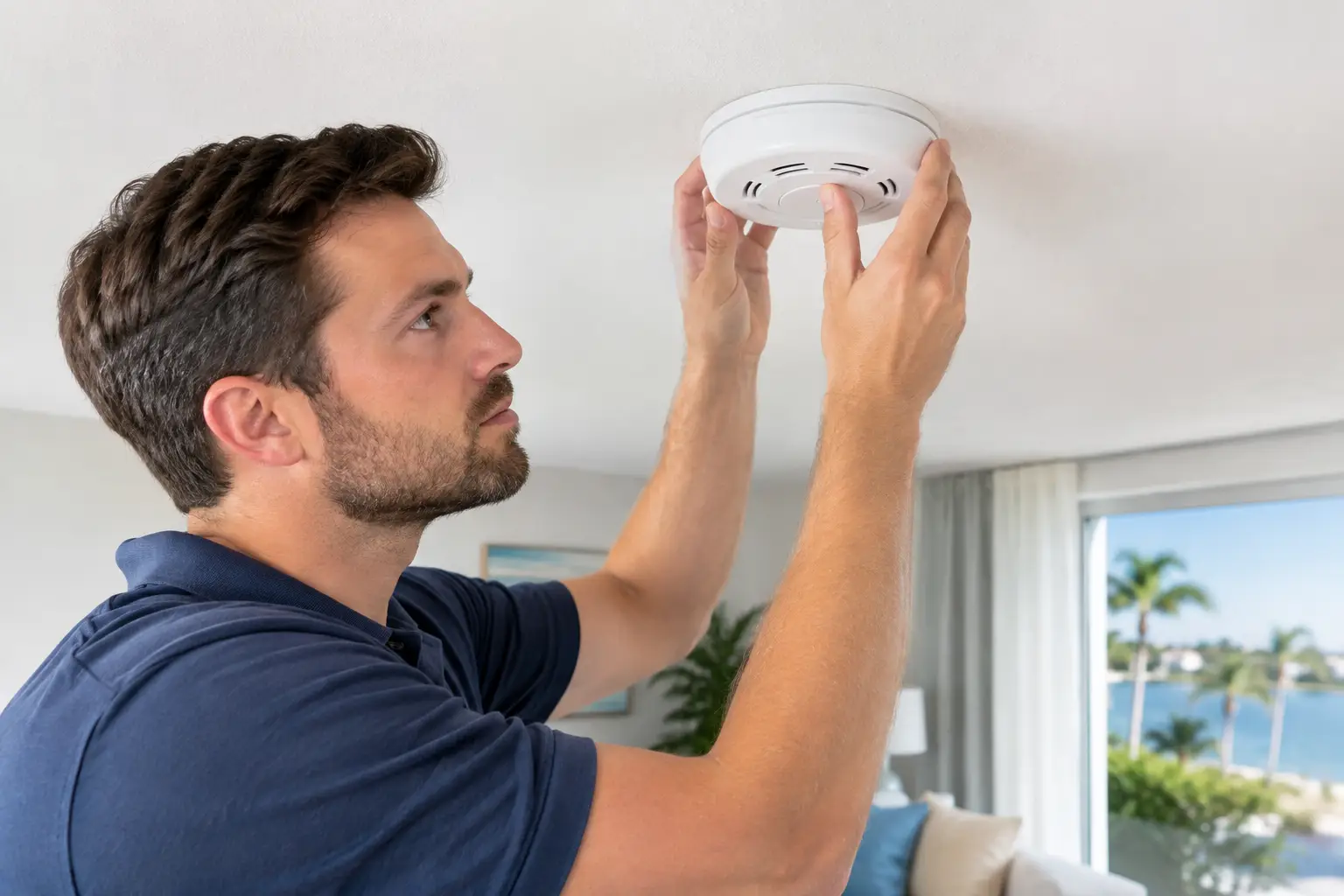
Test alarms at turnover, during scheduled property inspections, after electrical work, and whenever a resident reports a chirp, false alarm, physical damage, or loose device. At minimum, follow the manufacturer's recommended test frequency and any requirements that apply to your property. A quick press of the test button verifies power and the alarm function. Cleaning dust from vents and checking that the unit is firmly mounted should happen at the same visit.
For a rental portfolio, use a standard inspection record. Note the property address, room location, device type, manufacture or replacement date, test result, battery condition if applicable, and technician's name. Photos are useful, especially at move-in and turnover. They show that the alarm was installed, accessible, and tested at a specific point in time.
Documentation is not busywork. It gives owners a clear maintenance history, helps maintenance teams identify recurring issues, and creates a record when a resident says an alarm was missing or nonfunctional. It also prevents a common turnover problem: a new tenant moves in before anyone realizes a detector was removed during painting or remodeling.
Set Clear Resident Expectations
Residents should know how to test an alarm, what a low-battery chirp sounds like, and how to report a problem. They should also understand that smoke detectors are safety equipment, not items to cover, remove, paint, or disconnect.
Put those expectations in the lease and repeat them in the move-in packet. Ask residents to report issues immediately rather than waiting for a routine inspection. A short maintenance request can prevent days or weeks of an inactive alarm.
At the same time, owners and managers should avoid placing the full burden on residents. A tenant may report a dead battery, but the property owner or manager still needs a process to respond, verify the fix, and document the work. If an alarm keeps sounding near cooking activity, solve the placement or equipment issue instead of treating repeated complaints as a resident problem.
When a resident reports an alarm concern, ask a few direct questions: Is it chirping once every minute or sounding continuously? Is there visible damage? Was there steam, cooking smoke, or a recent power outage? Is the alarm hardwired? The answers help determine whether the call needs immediate service, a battery replacement, or an electrician's attention.
Treat Turnovers as Your Best Safety Checkpoint
Turnover is the cleanest time to inspect every smoke detector in a unit. The property is accessible, walls and ceilings are visible, and maintenance teams can make corrections without scheduling around an occupied home.
Include smoke and carbon monoxide alarms on the turnover checklist alongside locks, plumbing fixtures, HVAC filters, appliances, GFCI outlets, and exterior lighting. Each device should be present, securely mounted, clean, tested, and within its service life. Replace damaged, yellowed, painted-over, or outdated alarms instead of trying to save a few dollars on a questionable device.
This is also the right time to check whether renovations changed the floor plan or sleeping-room use. A former office may now be marketed as a bedroom. A garage conversion or addition may have created a new sleeping area. Changes like these can affect alarm placement requirements and should be reviewed before the unit is advertised.
Know When the Job Needs a Licensed Professional
Changing a compatible battery-powered detector is usually straightforward. Hardwired systems, interconnected alarms, electrical boxes, damaged wiring, and alarms that continue malfunctioning after basic checks are different. Those issues may require qualified electrical service.
The same applies when a renovation triggers updated code requirements or when there is uncertainty about what applies to a particular building. Guessing can create a failed inspection, a delayed move-in, or a safety gap. A local maintenance team can coordinate the inspection, replacement, electrical work, and documentation so the owner is not chasing separate vendors.
R&M Services handles property maintenance with that operational mindset: identify the issue, complete the repair, and document the result so owners can move on to the next priority.
A dependable smoke detector program is not complicated. It is a routine of correct installation, scheduled testing, prompt repairs, clear resident communication, and clean records. Build that routine into every turnover and inspection, and one of the simplest devices in the property can do the job it was designed to do when it matters most.