A commercial restroom can look fine at 8 a.m. and become a tenant, customer, or employee complaint by noon. An empty soap dispenser, leaking toilet, clogged drain, or wet floor sends a message that the property is not being watched. Knowing how to maintain commercial restrooms gives owners and managers a practical way to prevent those small issues from becoming sanitation problems, water damage, emergency calls, and lost goodwill.
For offices, retail spaces, medical facilities, restaurants, and multi-tenant properties, restroom maintenance is not just a cleaning task. It is a recurring operations system. The best results come from assigning clear responsibilities, checking fixtures before they fail, documenting problems, and bringing in qualified repair help before a leak or backup takes a restroom out of service.
How to Maintain Commercial Restrooms on a Working Schedule
A restroom maintenance plan should match the volume of people using the space. A small professional office may need one thorough daily service and a quick afternoon check. A busy retail location, restaurant, or public-facing facility may need checks every hour or two. Using the same schedule for every property is how supplies run out and minor leaks go unnoticed.
Start by defining who checks the restroom, when they check it, and what they are expected to document. A simple paper log can work, but digital logs are easier to review across multiple locations. The goal is accountability, not paperwork for its own sake. When a complaint comes in, you should be able to see when the restroom was last inspected and what condition it was in.
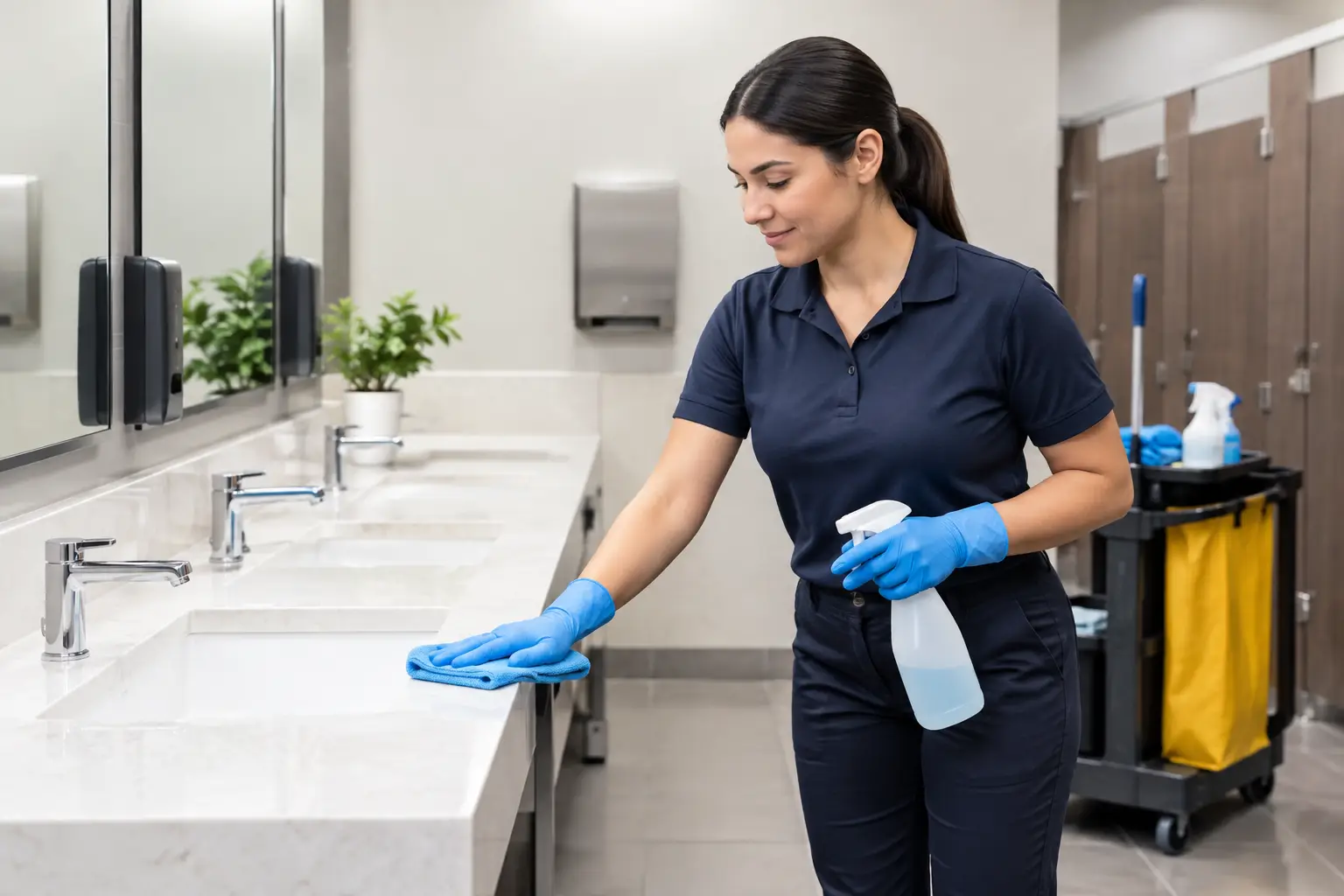
Daily service should cover cleaning and basic function. Toilets and urinals should flush correctly, sinks should drain, faucets should shut off fully, and soap, paper products, and trash receptacles should be handled before they become a problem. Floors deserve close attention. Standing water can create slip hazards, hide a plumbing leak, and damage baseboards or flooring if it is left in place.
Weekly checks should go further. Look under sinks, around toilet bases, behind urinals, and near supply valves for moisture, corrosion, loose connections, or staining. Check stall doors, partitions, mirrors, grab bars, dispensers, and hand dryers for damage or loose mounting. These are small repairs until they are not. A loose grab bar or failing partition is a safety concern, while a slow leak can quietly damage walls and flooring.
Monthly inspections are the right time to test every fixture more deliberately. Run all faucets, flush each toilet and urinal several times, check drain speed, inspect caulk and grout, and look at exhaust fan performance. If the restroom smells musty even after cleaning, do not assume it is a housekeeping issue. The source may be a dry drain trap, failed wax ring, drain blockage, hidden leak, or poor ventilation.
Keep Cleaning Separate From Repair Work
Cleaning staff are often the first people to spot restroom problems, but they should not be expected to diagnose or repair every issue. Their role is to identify changes quickly: a toilet that needs two flushes, a faucet that runs after use, water near a wall, a drain that gurgles, or a recurring odor. Those observations should move to the person responsible for maintenance without delay.
This separation matters because repeated cleaning can hide the evidence of a plumbing issue. If staff mop up water around the same toilet every day without reporting it, the property may be dealing with a failed seal or cracked fixture. By the time the problem is obvious, moisture may have reached subflooring, adjacent walls, or the ceiling below.
Use a clear reporting standard. A good report identifies the restroom, fixture, issue, time discovered, and whether the area was closed off. Photos are especially useful for leaks, damaged partitions, overflowing fixtures, and repeated vandalism. Documentation helps property managers make decisions faster and gives owners a record of what was found and repaired.
Protect Plumbing Before It Becomes an Emergency
Commercial restroom plumbing takes more abuse than residential plumbing. High use, hard water, paper product misuse, and worn components all add up. Preventive maintenance is usually less disruptive and less expensive than responding to an overflow during business hours.
Watch for slow drains, recurring clogs, weak flushes, and toilets that run after flushing. A slow drain may be buildup in the line, but it can also point to a larger blockage developing farther downstream. Repeated clogs in the same fixture should not be handled with a plunger forever. The underlying cause may be a failing flush valve, a drain restriction, poor water flow, or users flushing items that do not belong in the system.
Supply lines, shutoff valves, fill valves, flushometers, and faucet cartridges also wear out over time. A toilet that keeps running may waste a surprising amount of water, and a leaking faucet creates both utility costs and an appearance problem. Repairing these items promptly protects the budget and helps prevent a sudden fixture failure when the restroom is busy.
In older commercial spaces, keep a record of prior plumbing repairs and problem areas. Patterns matter. If the same sink drain clogs every month or a certain toilet leaks after every repair, it may be time to look beyond the immediate symptom. Replacing a worn fixture or addressing a branch-line issue can be the better long-term decision.
Control Moisture, Odors, and Florida Humidity
In Marion County, humidity makes restroom ventilation more than a comfort issue. Moisture lingers longer, odors become more noticeable, and mildew can develop around caulk, grout, ceilings, and poorly ventilated corners. A clean restroom that stays damp will not stay clean-looking for long.
Make sure exhaust fans operate during occupied hours and actually move air outside rather than simply making noise. Dirty fan grilles, blocked ductwork, weak motors, or a failed timer can reduce airflow without drawing much attention. If a restroom has no effective mechanical ventilation, the maintenance plan may need more frequent cleaning and moisture checks until the ventilation issue is corrected.
Odor complaints need a methodical response. First, confirm the space is clean and that trash is removed. Then check for dry floor drains, slow drains, leaks around toilets, loose cleanout caps, and ventilation problems. Pouring water into seldom-used floor drains can restore the trap seal and stop sewer gas from entering the room. If the odor continues, it is time for a plumbing inspection rather than stronger fragrance products.
Stock Supplies Like an Operations Issue
A restroom cannot function properly when soap, toilet paper, towels, or sanitary disposal supplies are missing. These shortages also increase misuse. Without paper towels, users may use excess toilet paper. Without soap, the property creates an avoidable hygiene issue. Without a working trash can, waste ends up on counters or floors.
Set minimum supply levels for each restroom and restock before the lowest acceptable level is reached. The right inventory depends on traffic, dispenser size, and delivery timing. High-volume locations may benefit from locking dispensers and backstock stored nearby. Smaller offices may only need a weekly count, as long as someone owns the task.
Standardizing dispensers and consumables across a property or portfolio makes this easier. It reduces the chance of ordering the wrong refill and helps maintenance staff carry fewer product types. The trade-off is that replacing mismatched older dispensers may cost money upfront, but it often saves time and prevents stockouts later.
Do Not Ignore Safety and Accessibility Details
Restroom maintenance affects more than appearance. Loose floor tile, peeling caulk, broken locks, sharp partition edges, unstable grab bars, and poor lighting can create legitimate safety concerns. Check these items during routine inspections, especially in restrooms used by the public.
Accessibility features require the same attention as plumbing fixtures. Keep accessible routes clear, make sure grab bars are secure, maintain door hardware, and repair malfunctioning sinks, faucets, and dispensers promptly. A feature that exists but does not work is not a reliable solution for the people who need it.
When a repair cannot be completed immediately, close off the affected fixture or area if it presents a slip, sanitation, privacy, or safety risk. A clear temporary closure is better than allowing people to use a damaged restroom fixture and hoping it holds through the day.
Build a Fast Response Plan for Failures
Even a well-maintained restroom will eventually have a clog, leak, broken fixture, or overflow. The difference between a minor disruption and a costly incident is the response plan. Staff should know where water shutoffs are located, who to call, how to close off the area, and when the issue requires emergency service.
For property owners managing several vendors, restroom failures can create the familiar problem of chasing a cleaner, plumber, handyman, and flooring contractor separately. A coordinated maintenance team can reduce that friction by documenting the issue, handling the immediate repair, and identifying any follow-up work before the damage spreads.
R&M Services helps commercial property owners throughout Ocala and Marion County keep small maintenance problems from turning into larger disruptions. The practical goal is simple: working fixtures, clean and safe restrooms, documented repairs, and fewer calls that pull owners away from the rest of the property.
A dependable restroom plan is not complicated, but it does require consistency. Check often, document what changes, repair leaks and drainage issues early, and treat repeat problems as a signal to investigate rather than another item to clean around.