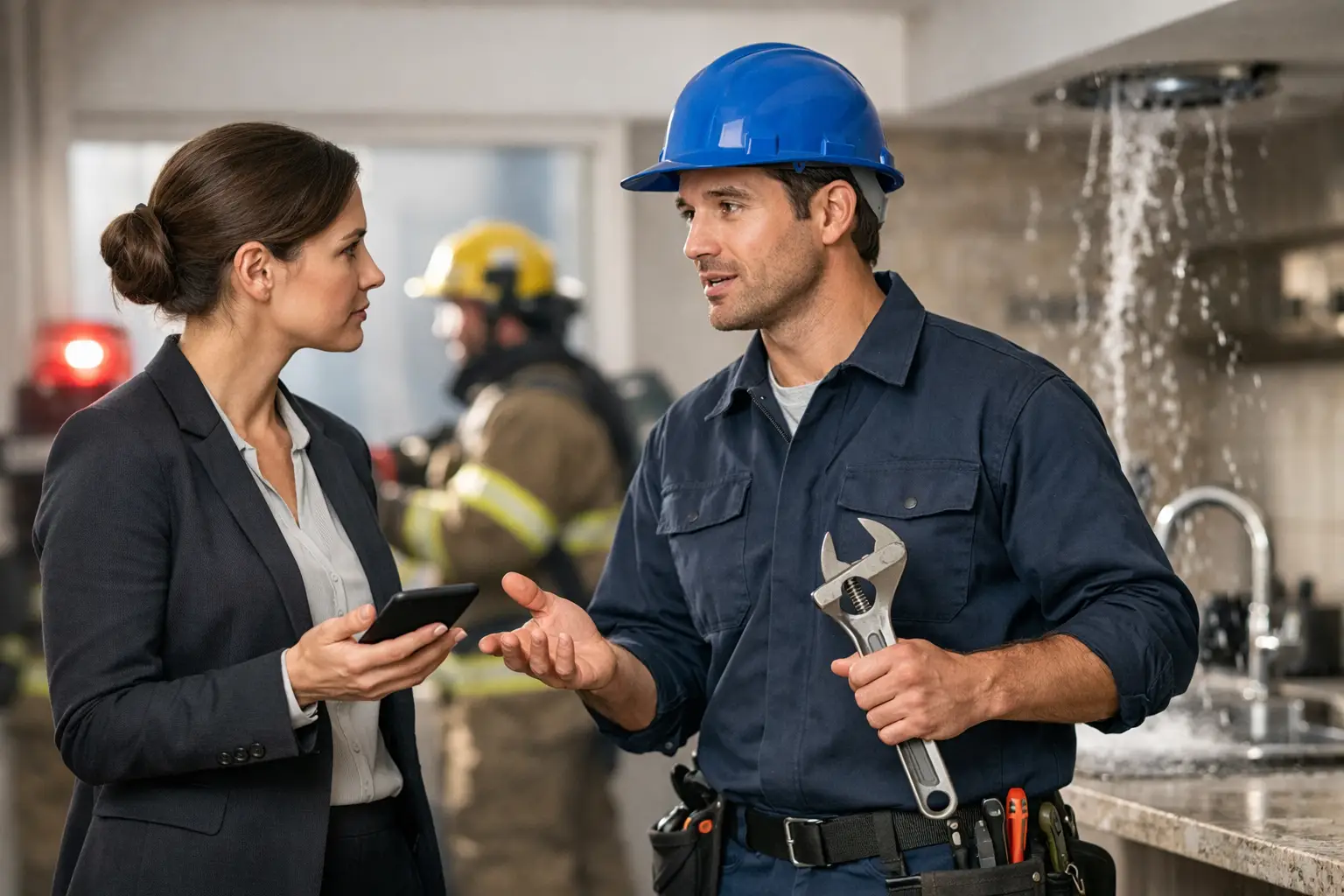
A tenant calls at 11:30 p.m. because water is pouring through the ceiling. A storefront loses air conditioning during a July heat wave. A toilet backs up in a two-bath rental with young children inside. These are not problems that can sit in an inbox until morning. Emergency maintenance responsibility needs to be clear before the call comes in, because uncertainty costs time, damages property, and can put residents at risk.
For property owners and managers, the goal is not to debate blame while the damage spreads. The goal is to protect people first, limit the loss, document what happened, and get the right repair underway. Responsibility may ultimately fall on an owner, tenant, association, vendor, or insurer, but the immediate response still has to happen.
What Counts as a Maintenance Emergency?
An emergency is more than an inconvenient repair. It is a condition that threatens safety, causes active property damage, affects essential services, or makes the space unsafe or unlivable.
Common examples include an active water leak or burst pipe, sewage backup, electrical sparking or burning odors, a gas smell, a break-in that leaves doors or windows unsecured, major roof damage after a storm, and loss of air conditioning or heat when weather conditions create a health concern. In Marion County, a failed HVAC system can become urgent quickly during prolonged Florida heat, particularly for elderly residents, children, or tenants with health needs.
A dripping faucet, one broken cabinet hinge, or a dishwasher that stops working usually does not require a middle-of-the-night dispatch. Those issues still deserve prompt attention, but calling them emergencies can pull resources away from genuine hazards. A good maintenance policy distinguishes between urgent repairs that need same-day action and true emergencies that require an immediate response.
Emergency Maintenance Responsibility Starts With the Lease
For most rental properties, the owner is responsible for keeping the property safe and maintaining systems that the tenant did not damage or misuse. That typically includes plumbing, electrical systems, structural components, roofing, major appliances supplied by the owner, and HVAC equipment. Florida landlord-tenant requirements can be fact-specific, so owners should use a current lease and obtain legal guidance when a situation involves a dispute, habitability claim, or possible lease violation.
Tenants also have responsibilities. They should report problems promptly, take reasonable steps to prevent further damage, use the property properly, and avoid making unapproved repairs that create a larger issue. If a tenant notices water under a sink and waits three days to mention it, a simple supply-line repair may turn into damaged cabinetry, flooring, and mold remediation.
The lease should clearly explain how tenants report after-hours issues, which conditions qualify as emergencies, whether they may shut off water or power when it is safe to do so, and who they should contact first. It should also explain that tenants may be charged when their actions caused the damage, subject to the lease and applicable law. Clear expectations reduce arguments and help everyone act faster.
Ownership Does Not Always Mean Immediate Fault
An owner may be responsible for arranging the repair even when the final cost belongs to someone else. For example, if a tenant clogs a drain with prohibited materials and wastewater backs up into the home, the owner or manager may still need to send a plumber right away. The property cannot remain in that condition while the parties argue about reimbursement.
The same principle applies to condominium and HOA properties. A leak may originate from a neighboring unit, a common plumbing line, or a roof managed by the association. The owner should notify the appropriate party and preserve evidence, but someone must still coordinate access, emergency mitigation, and communication with the resident.
The First Hour: Protect People and Stop the Damage
The first response should be practical. Ask whether anyone is in immediate danger. If there is fire, a suspected gas leak, major electrical hazard, or a medical emergency, the tenant should call 911 first. Maintenance personnel are not a replacement for emergency services.
For water events, instruct the resident to shut off the local fixture valve or main water valve if they can do so safely. For a roof leak, move belongings away from the affected area and use containers to catch water when appropriate. For an electrical concern, do not touch standing water near outlets, panels, or appliances. These simple actions can prevent a repairable incident from becoming a costly claim.
Next, dispatch the correct trade. Sending a general handyman to diagnose a live electrical issue or a severe sewer backup wastes time. A capable maintenance team screens the call, identifies the likely risk, and sends a qualified professional or coordinates the needed specialist. Photos, videos, and a short description from the tenant are useful, but they should never delay action when safety is at stake.
A Practical Emergency Maintenance Process
Reliable emergency service depends on a process, not just a phone number. The strongest system has three parts: fast reporting, informed triage, and documented completion.
First, residents need one clear reporting path. A scattered approach - texting an owner, emailing a leasing agent, and calling different vendors - creates missed messages and duplicate work. Give tenants an after-hours contact method and tell them what information to provide: the property address, the problem, whether anyone is in danger, and whether damage is actively spreading.
Second, triage the issue based on safety and damage potential. A technician may be able to stop a leak, secure an opening, restore limited service, or make a temporary repair outside normal hours. Full restoration may require parts, permits, insurance approval, or a follow-up visit. That is not poor service if the property is made safe and the next step is clearly communicated.
Third, document the work. Record the time of the call, reported condition, photos of the damage, actions taken, vendor findings, and repair recommendations. Good documentation protects owners when costs are questioned, supports insurance claims, and helps determine whether the issue resulted from normal wear, a system failure, or tenant-caused damage.
Where Owners Commonly Lose Time and Money
The biggest failures rarely come from one broken pipe. They come from unclear authority and delayed decisions. An owner who has not approved spending limits may be unreachable when a technician needs authorization. A tenant who does not know where the water shutoff is may watch a small leak damage half a unit. A manager without a trusted vendor list may spend valuable time calling contractors who do not answer.
Preventive maintenance reduces these pressure points. Inspect plumbing connections, water heaters, roof penetrations, HVAC performance, electrical panels, exterior drainage, and door hardware before they fail. During turnovers, test every system while the unit is vacant. That is the best time to find weak shutoff valves, slow drains, failing appliances, and worn weatherproofing without disrupting a resident or risking rental income.
Owners with multiple properties should also establish emergency spending authority. The amount depends on the property type and budget, but a preapproved limit allows a manager to stop active damage without waiting for a callback. Require notification and documentation, not permission for every urgent step.
When a Property Manager Takes the Lead
A full-service property manager acts as the owner's practical extension when an emergency occurs. That means receiving the maintenance request, communicating with the resident, dispatching the right provider, approving work within agreed limits, documenting the event, and keeping the owner informed without requiring them to coordinate every detail.
That accountability matters most after hours, during storms, and during tenant turnovers. R&M Services helps owners throughout the Ocala area reduce the contractor chase by coordinating emergency repairs and the follow-up work needed to return a property to normal. One accountable team is often more valuable than a long list of disconnected contacts.
Build the Plan Before the Next Call
Emergency maintenance responsibility is easiest to manage when everyone knows their role before anything breaks. Put reporting instructions in the lease, keep vendor contacts current, document shutoff locations, set approval limits, and inspect the systems most likely to fail. Then, when a resident calls with water on the floor or no air conditioning, the response is immediate, organized, and focused on protecting the property.
A good emergency plan does more than solve the next crisis. It gives owners back their time, gives tenants confidence that help will arrive, and keeps one bad night from becoming a much larger repair bill.