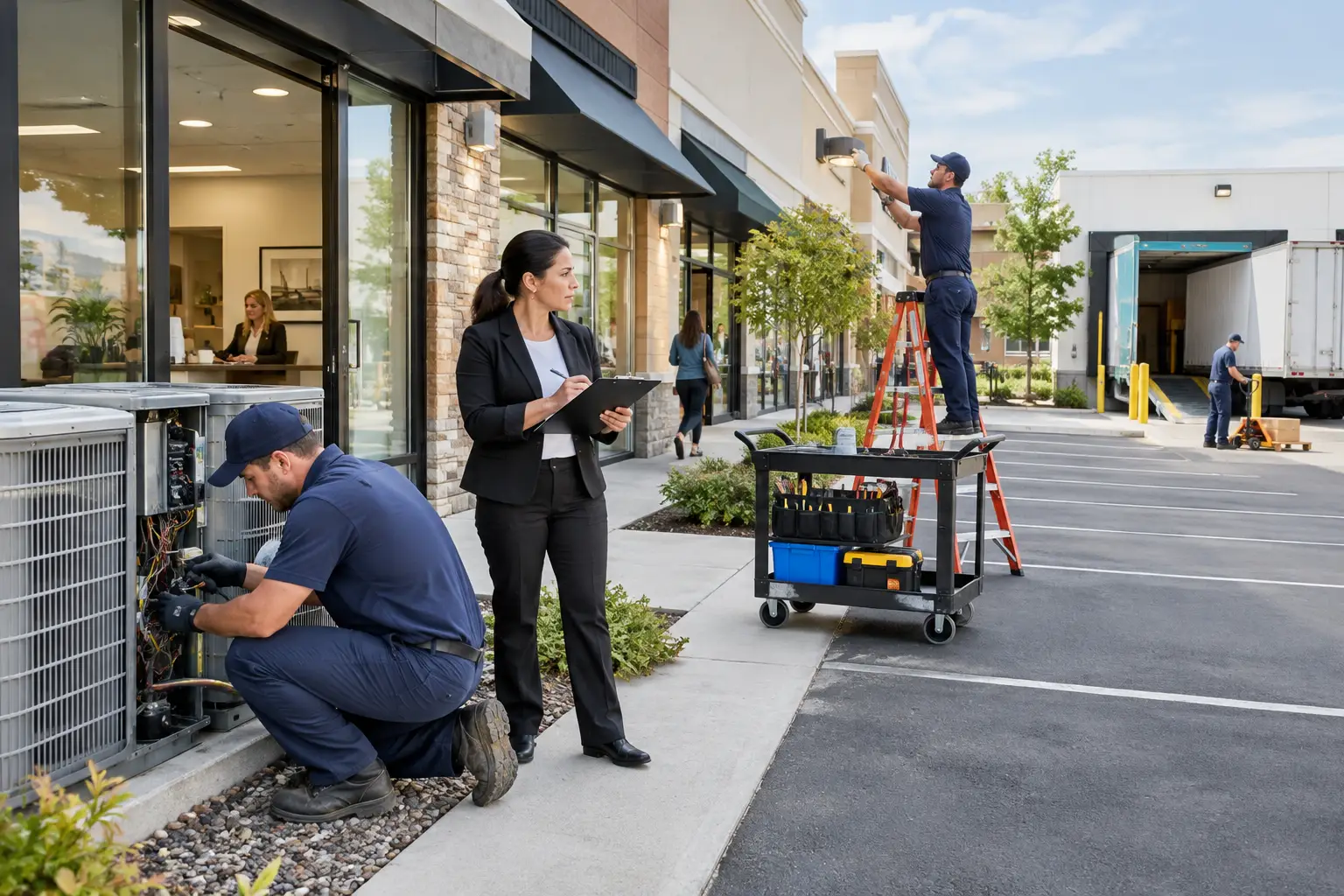
A failed air conditioner on a humid Florida afternoon, a leaking restroom, or a damaged storefront door can interrupt business before the owner even hears about it. Commercial lease upkeep is how owners prevent those small operational issues from turning into tenant complaints, lost sales, lease disputes, and expensive emergency calls.
For commercial property owners, maintenance is not just about keeping a building looking presentable. It protects the income-producing function of the space. A retail tenant needs working lights, safe entrances, reliable plumbing, and comfortable temperatures to serve customers. An office tenant needs the same basics to keep staff productive. When a property is not maintained, the issue quickly becomes larger than a repair ticket.
Commercial Lease Upkeep Starts With the Lease
The first question is not always, "Who can fix this?" It is, "Who is responsible for it?" Commercial leases can place maintenance duties on the landlord, the tenant, or both. A tenant may handle interior maintenance and minor repairs, while the owner remains responsible for the roof, structure, exterior, common areas, major plumbing lines, or HVAC replacement. In triple-net arrangements, the tenant may carry more of the ongoing cost, but owners still need oversight.
Do not assume the lease language settles every situation without interpretation. A clogged sink caused by tenant use is different from a recurring backup in an aging shared drain line. A broken storefront window may be tenant damage, storm damage, or a security issue that requires immediate action regardless of who ultimately pays.
The practical approach is to review each lease before a problem occurs and create a clear responsibility matrix. Identify who handles routine interior repairs, HVAC servicing, landscaping, pest control, exterior lighting, parking areas, roof leaks, plumbing failures, and after-hours emergencies. When responsibilities are documented, maintenance requests move faster and billing is easier to support.
What Happens When Upkeep Is Deferred
Deferred maintenance often starts with a reasonable excuse. The tenant says a door drags but it still locks. A gutter is loose but has not fallen. The HVAC is running, even though it is louder than normal. Then a storm arrives, a component fails, or the space becomes uncomfortable enough to affect the tenant's operations.
The cost of waiting is rarely limited to the original repair. Water from a minor roof or plumbing leak can damage ceiling tile, drywall, flooring, inventory, and electrical components. A neglected drain can close a restroom. A failed exterior light can create a safety concern and make a commercial building look vacant or poorly managed.
There is also a relationship cost. Commercial tenants expect a prompt response because their business depends on the property functioning. If they repeatedly have to chase updates or arrange repairs themselves, renewal conversations become harder. A well-maintained space gives tenants one less reason to move when their lease term ends.
Build a Preventive Maintenance Plan Around the Property
Every commercial property needs a maintenance plan, but the plan should reflect how the building is used. A small professional office has different priorities than a restaurant, retail strip center, warehouse, medical suite, or mixed-use building. The goal is not to perform work for the sake of a checklist. The goal is to find failure points before they disrupt a tenant.
HVAC, Plumbing, and Electrical Need Regular Attention
In Marion County, HVAC maintenance deserves special attention. Heat, humidity, heavy summer use, and clogged condensate lines can turn a minor service issue into a no-cooling call. Scheduled filter changes, drain line checks, coil cleaning when needed, and performance inspections help reduce preventable breakdowns. They also give owners a documented record of care when a larger repair or replacement is needed.
Plumbing inspections should focus on active leaks, slow drains, water pressure concerns, toilet operation, shutoff access, water heaters, and visible corrosion. In multi-tenant properties, it is especially useful to identify which lines serve a single suite and which are shared. That distinction saves time when there is an urgent backup or leak.
Electrical upkeep includes checking exterior and emergency lighting, outlets in common areas, panels for obvious concerns, damaged covers, GFCI protection where appropriate, and signs of overloaded circuits. A flickering light may be a simple fixture issue. It may also point to a failing ballast, loose connection, or electrical load problem. It depends on the building and the symptom, which is why a qualified inspection matters.
The Exterior Protects the Interior
Commercial property upkeep does not stop at the front door. Roof edges, gutters, drainage paths, sidewalks, parking areas, landscaping, exterior paint, signage supports, and entry doors all affect tenant operations and first impressions.
Keep trees and landscaping trimmed away from buildings, signs, walkways, and HVAC equipment. Clear drainage routes before heavy rain exposes a grading or gutter problem. Repair trip hazards in sidewalks and parking areas promptly. Inspect doors, locks, closers, and weatherstripping so tenants can secure the space without forcing hardware that is already failing.
A clean, functional exterior also communicates that the property is actively managed. That matters to customers visiting a retail center, clients entering an office, and prospective tenants evaluating available space.
A Simple System Keeps Repairs From Getting Lost
The best maintenance plan fails if requests disappear in text messages, voicemail, or an overloaded inbox. Owners need one process for reporting, approving, completing, and documenting work.
Start with a clear maintenance request path for tenants. The request should capture the suite number, issue description, urgency, photos when available, and the best contact person for access. Emergencies should have a separate after-hours process so a burst pipe, security issue, or major HVAC failure does not wait until the next business day.
Next, triage the request. Is it an immediate safety concern? Is it affecting the tenant's ability to operate? Is there a risk of property damage if no one responds today? These questions help prioritize work without treating every request as the same level of emergency.
Finally, document completion. A good work record includes the reported issue, diagnosis, work performed, materials used, photos when helpful, cost, and any recommended follow-up. This protects the owner, keeps tenants informed, and creates a maintenance history that is useful during renewals, turnovers, budgeting, and property sales.
Plan for Turnovers Before a Space Is Vacant
Commercial turnover work can be more complicated than a quick paint-and-clean job. One departing tenant may leave behind wall damage, abandoned equipment, altered electrical or plumbing, worn flooring, signage hardware, or unapproved modifications. Another space may need only minor repairs and cleaning before it can be shown.
The key is to inspect early. When a tenant gives notice, compare the condition of the suite with the lease, prior inspection records, and any approved alteration agreements. Identify repairs that are the tenant's responsibility, owner improvements needed to attract the next tenant, and work that must be completed before marketing or move-in.
Coordinating multiple trades separately can create gaps and delays. One accountable maintenance team can handle the punch list, schedule licensed work when required, keep the work moving in the right order, and provide photos of completed items. That reduces vacancy time and prevents the owner from becoming the middleman between several contractors.
Budget for Upkeep Instead of Reacting to It
A commercial maintenance budget should include both planned service and a reserve for the unexpected. Routine inspections and minor repairs are predictable enough to schedule. Roof failures, water heaters, HVAC replacements, storm damage, and tenant-caused issues are less predictable, but they should not come as a complete surprise.
Track repeated repairs. If the same HVAC unit needs service every few months, the right question may no longer be whether to approve another repair. It may be whether replacement is the better business decision. The same applies to recurring drain backups, door hardware failures, aging exterior lighting, and water intrusion.
The lowest upfront quote is not always the lowest operating cost. A repair that solves the immediate problem but leaves the root cause untouched may lead to another service call, another tenant disruption, and more damage. Good commercial lease upkeep balances cost control with work that actually holds up.
One Point of Responsibility Makes a Difference
Commercial owners are often managing leases, finances, vendors, tenant expectations, and other properties at the same time. They should not have to spend their day tracking down a plumber, then an electrician, then a landscaper, then someone willing to handle a small but urgent repair.
R&M Services provides a practical local option for commercial owners who need repairs, preventive maintenance, exterior upkeep, emergency response, and turnover coordination managed by one accountable team. Clear communication and documented work help owners stay informed without having to supervise every job personally.
A commercial building does not need constant attention from the owner. It needs a dependable upkeep system that catches problems early, responds quickly when something breaks, and leaves a clear record of what was done. That is how a property stays functional for tenants and productive for its owner.