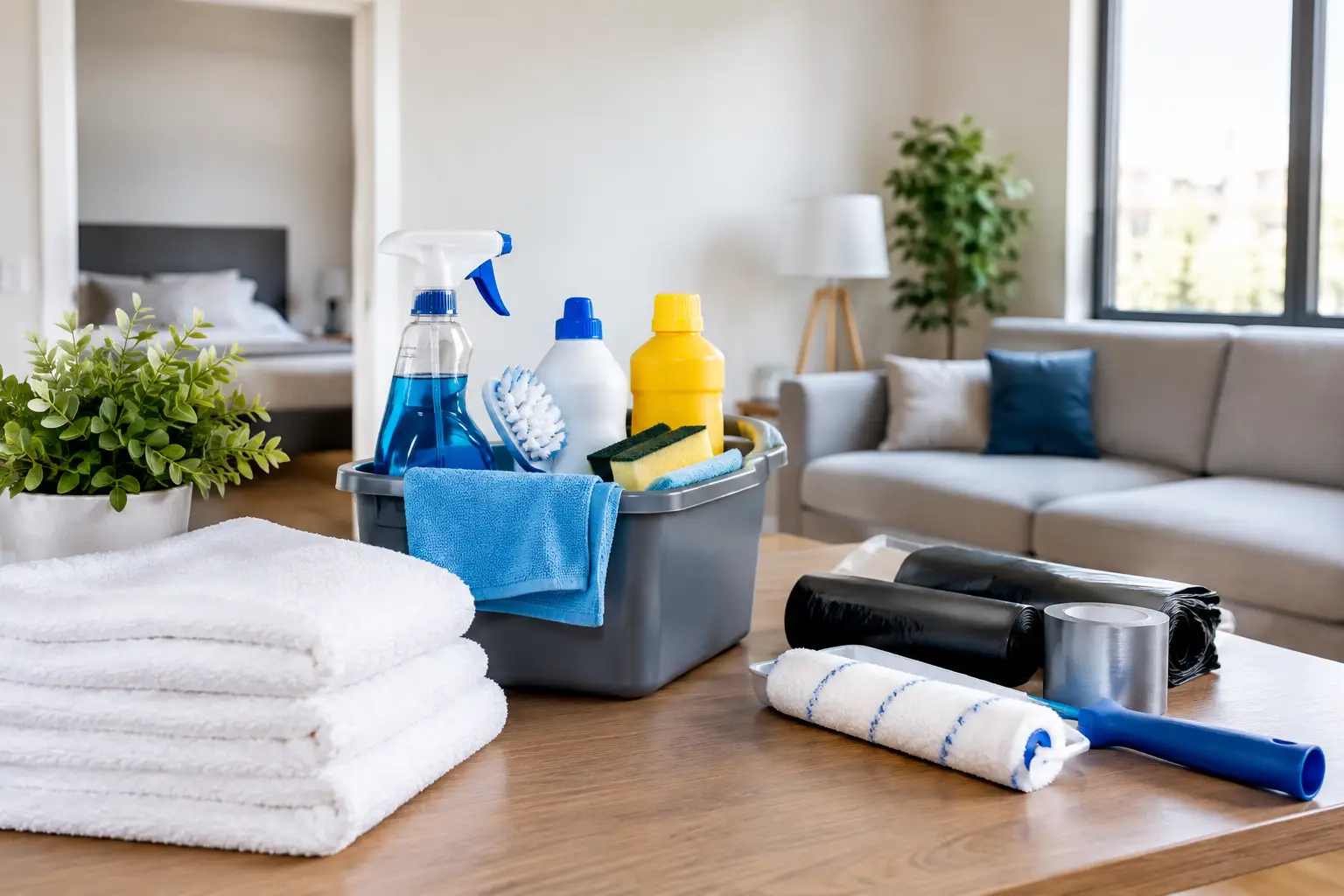
A turnover can lose money long before a unit sits vacant. It loses money when a maintenance tech has to leave for caulk, when a cleaner finds no replacement bulbs, or when a simple leak becomes a delayed move-in. Keeping essential turnover supplies for landlords on hand gives you a faster path from move-out inspection to rent-ready property.
The goal is not to fill a storage room with random hardware. It is to keep a controlled inventory of the items that repeatedly hold up repairs, cleaning, safety checks, and final presentation. For owners with rentals in Ocala and throughout Marion County, that also means stocking for heat, humidity, hard water, pests, and heavy HVAC use.
Build a Turnover Kit Around the Work That Delays Leasing
A good turnover kit supports a predictable sequence: inspect the unit, document its condition, complete repairs, clean thoroughly, verify safety items, and complete a final walk-through. Supplies should be organized around that workflow, not purchased only after a problem is discovered.
Keep the consumable materials separate from reusable tools. Consumables disappear quickly and should be counted after every turnover. Tools must be checked for condition, batteries, and return to storage. That simple separation prevents the common situation where a crew arrives with the right tool but no replacement parts, or has the supplies but cannot complete the repair.
For a single rental, a labeled shelf or locking tote may be enough. For a larger portfolio, use bins by trade and set minimum quantities. When stock reaches the minimum, reorder before the next vacancy. The small cost of carrying common supplies is usually far less than losing a day of rent because of one missing item.
Essential Turnover Supplies for Landlords: The Core Stock
The exact inventory depends on the age and condition of the property. A newer condo needs different parts than an older single-family home with original plumbing fixtures. Still, most landlords benefit from keeping the following categories ready.
Cleaning and odor-control supplies
A move-out cleaning needs more than an all-purpose spray. Keep a commercial-grade degreaser for kitchens, disinfectant for bathrooms, glass cleaner, floor cleaner matched to the unit's flooring, scrub pads, microfiber cloths, mop heads, heavy-duty trash bags, gloves, and paper towels. Add a grout brush, toilet brush, scraper, and a vacuum with clean filters.
Odor control deserves its own plan. Enzyme cleaner is useful for organic odors and pet accidents, while baking soda and odor-absorbing products can help after cleaning. Do not use fragrance as a substitute for finding the source. A strong air freshener may briefly mask smoke, mildew, pet, or drain odors, but a prospective tenant will notice when the scent fades.
In Florida, humidity can turn a minor moisture issue into a musty smell quickly. If a unit has been closed for several days, inspect closets, under sinks, around air handlers, and along exterior walls before cleaning begins. Cleaning supplies cannot solve an active leak, HVAC drainage issue, or mold concern.
Paint, patch, and finish materials
Paint touch-ups are one of the quickest ways to make a rental feel maintained, but only when the finish matches. Keep clearly labeled leftover paint for each property whenever possible, including the room, color, sheen, and date. Store it properly and check that it is still usable before relying on it for a last-minute repair.
Your patch kit should include lightweight spackle, joint compound, drywall patches, sandpaper in several grits, painter's tape, putty knives, caulk, a caulk gun, wood filler, and touch-up brushes or rollers. Keep white and paintable caulk available for common gaps around trim, tubs, sinks, and backsplashes.
There is a trade-off here. Small nail holes and minor scuffs are quick touch-up work. Large wall repairs, water staining, widespread mismatched paint, or damaged texture often justify repainting the full wall or room. Trying to save a few dollars with obvious patchwork can make an otherwise clean unit look neglected.
Basic plumbing repair supplies
A dripping faucet, loose toilet seat, clogged drain, or worn supply line should not wait for a special-order part if it can be safely addressed during a turnover. Stock common toilet flappers, fill valves, wax rings, supply lines, toilet seat hardware, drain stoppers, plumber's tape, silicone sealant, and assorted washers and O-rings.
Keep a plunger, hand auger, bucket, drain pan, and basic leak-detection materials with the plumbing supplies. Avoid treating harsh chemical drain cleaners as a default solution. They can damage some pipes, create hazards for the next technician, and do little for a deeper blockage. Repeated clogs, slow drains across multiple fixtures, water stains, or low pressure call for a proper diagnosis.
A turnover is also the right time to inspect under-sink shutoff valves, toilet bases, water-heater areas, and visible supply lines. Catching a weak connection before a tenant moves in protects the unit and avoids an after-hours maintenance call.
Electrical and lighting replacements
Nothing makes a unit feel less ready than dead bulbs, broken switch plates, or a smoke alarm chirping during a showing. Keep matching LED bulbs in the most common sizes used at each property, along with replacement batteries where applicable, outlet and switch covers, wire nuts, electrical tape, and replacement air-filter reminder labels.
Use bulbs with consistent color temperature throughout a room or unit. Mixing warm, cool, and daylight bulbs can make a freshly cleaned space look uneven. LED bulbs cost more upfront than basic incandescent options, but they reduce repeat replacements and energy use over time.
Electrical work has limits. Replacing a bulb or cover plate is different from diagnosing a tripping breaker, repairing damaged wiring, or replacing an outlet with signs of overheating. Those conditions require qualified service, especially in an occupied or soon-to-be-occupied rental.
Safety, HVAC, and access items
Turnover supplies should protect the next resident, not just improve appearances. Keep replacement smoke and carbon monoxide alarm batteries or units appropriate to the property, HVAC filters in the correct sizes, fire-extinguisher inspection tags where needed, and replacement doorstops. Check all life-safety devices according to applicable requirements and document the result.
For access control, have new keys, lock rekey materials where appropriate, mailbox keys, garage remote batteries, and labels ready. Every turnover should include an access review. Former tenants should not retain keys, codes, remotes, or smart-lock access after the lease ends.
HVAC filters are particularly important in Central Florida. A dirty filter can reduce airflow, increase operating strain, and trigger a tenant complaint shortly after move-in. Record the filter size and installation date so the next replacement is simple to schedule.
Do Not Forget Documentation Supplies
Photos are a turnover supply in their own right. Keep a charged phone or camera, backup battery, flashlight, measuring tape, inspection forms, and a way to label photos by property and room. Take clear move-out photos before repairs and move-in photos after the work is complete.
Documentation protects owners when security-deposit questions arise, but it also improves maintenance decisions. A photo showing repeated damage near a shower, window, or appliance can reveal a recurring issue that needs a real repair instead of another cosmetic patch. It also lets an owner verify what was done without chasing multiple vendors for updates.
Organize Supplies by Property, Not Just by Trade
A standard inventory is efficient, but every rental has details that should be tracked separately. Note the paint colors, bulb types, HVAC filter sizes, appliance model numbers, flooring materials, lock type, and frequently used repair parts for each unit. Put that information in the turnover file before the property is vacant.
This is especially useful for multi-unit owners. A unit-specific record cuts down on guesswork, prevents buying incompatible parts, and helps any authorized technician complete work correctly on the first visit. If a part is uncommon or expensive, it may not make sense to stock it. Keep the specifications documented instead, so ordering is accurate when needed.
Know When Supplies Are Not the Answer
A well-stocked kit handles routine make-ready work. It should not encourage shortcuts around significant damage, code requirements, water intrusion, HVAC failure, or electrical hazards. The fastest turnover is not always the one with the fewest invoices. It is the one that avoids callbacks, emergency repairs, and a disappointed new tenant.
When several trades are involved, one accountable team can keep the sequence moving: repair the leak before drywall work, complete painting before final cleaning, service the HVAC before the move-in inspection, and document each completed item. That coordination is often what protects the move-in date.
Keep your core inventory ready, inspect the property early, and order specialized materials as soon as the scope is clear. If the turnover starts to become a pile of disconnected jobs, R&M Services can coordinate the repairs, cleaning, inspections, and final details so your next rental is ready to show without you chasing contractors.