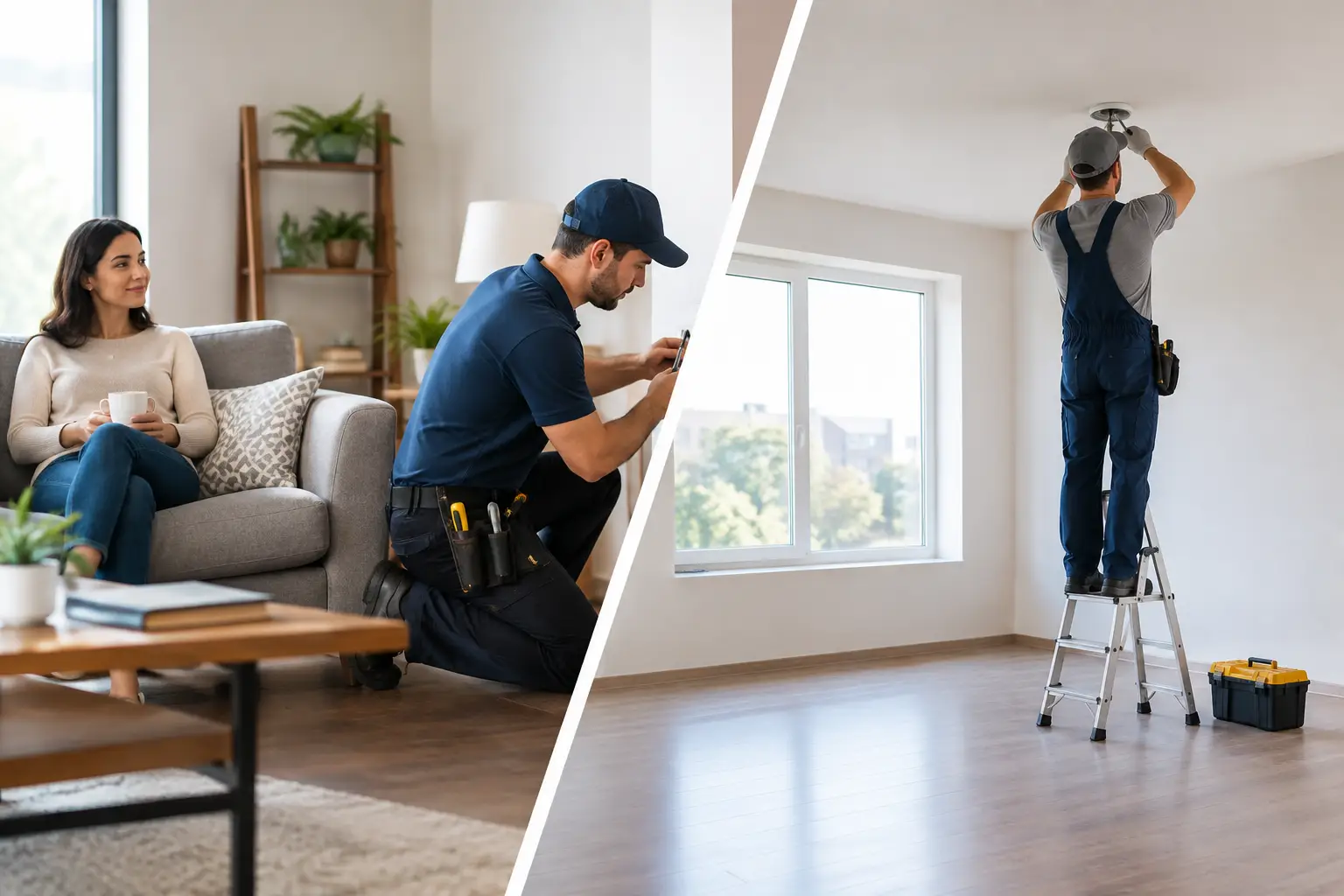
A leaking supply line at an occupied rental is a service issue with a resident waiting for answers. The same leak in an empty unit is a race against water damage, mold, and a delayed move-in date. That is the real difference in tenant occupied versus vacant repairs: the repair itself may be identical, but the risk, scheduling, communication, and cost of getting it done are not.
For owners, the wrong approach creates avoidable friction. A tenant gets frustrated when a contractor arrives without notice. A vacant unit sits off the market because five small issues were handled one at a time. The practical answer is not to treat every work order the same. It is to match the repair plan to the condition of the property and the urgency of the problem.
Tenant Occupied Versus Vacant Repairs: The Core Difference
Occupied repairs are about restoring safe, working conditions while respecting someone's home and schedule. Vacant repairs are about speed, scope control, and getting the property rent-ready without missing hidden defects that will become a new tenant's first maintenance request.
An occupied unit usually requires advance communication, confirmed access, a clear arrival window, and coordination around pets, children, remote work, or medical needs. Even a simple toilet repair can become a poor experience if the resident does not know who is coming or when the water will be shut off. For non-emergency work, the goal is to complete the repair efficiently with as little disruption as possible.
A vacant unit offers easier access and more flexibility for larger work, but it comes with a different financial pressure: every day without a qualified tenant can mean lost rent. There is also no resident inside to report a slow drip, a failing HVAC system, or a tripped breaker. A vacant-property inspection needs to be more deliberate because minor problems are often silent until they become expensive.
Repairs in an Occupied Rental: Protect the Resident Relationship
A responsive repair process helps retain good tenants. Residents do not expect every issue to be fixed instantly, but they do expect acknowledgment, a plan, and follow-through. When those basics are missing, small maintenance complaints quickly become complaints about the landlord.
Start with urgency, not convenience
Health and safety issues come first. Active water leaks, loss of air conditioning during Florida heat, electrical hazards, sewer backups, security concerns, and no hot water need prompt attention. Do not wait for a convenient day if a condition can damage the property or make the home unsafe or unlivable.
For routine items, schedule around the tenant when possible. A loose cabinet hinge or a dripping faucet may not require an emergency response, but it should not sit on a list for weeks. Deferred repairs tend to cost more and signal that future requests may also be ignored.
Communication is part of the repair
The resident should know what work is planned, who is expected to arrive, what time window applies, and whether utilities may be interrupted. If parts are required or a return visit is necessary, explain that before leaving the first visit. Clear communication reduces missed appointments, denied access, and avoidable tension.
Owners also need documentation. Photos before and after the work, notes on the cause of the problem, materials used, and recommended follow-up give you a clean record. This matters when tracking recurring issues, planning capital replacements, or separating normal wear from tenant-caused damage.
Keep the work area controlled
Occupied work has practical limits. Dusty drywall repairs, strong paint odors, flooring replacement, major plumbing access, and extensive electrical work may need to be phased or scheduled when the resident can be away. Some projects are simply better completed between tenancies when possible.
That does not mean postponing needed repairs. It means choosing the right sequence. A repair team should protect floors and furnishings, contain debris, clean up thoroughly, and leave the unit functional at the end of each workday whenever the scope allows.
Vacant Repairs: Move Fast Without Cutting Corners
Vacancy is the best time to handle projects that are disruptive, messy, or difficult to coordinate around a resident. Paint, flooring, cabinet repairs, appliance replacement, exterior work, deep cleaning, and multi-trade updates are generally more efficient when the unit is empty.
But vacant does not automatically mean simple. The key is to avoid the common turnover mistake of addressing only what is visible during a quick walk-through.
Inspect the whole unit before dispatching trades
A proper make-ready review looks beyond scuffed walls and burned-out bulbs. Test plumbing fixtures for leaks and drainage, check GFCI outlets, run appliances, inspect HVAC performance, examine screens and locks, and look for signs of moisture under sinks and around windows. In Marion County, HVAC performance and moisture control deserve special attention. An air conditioner that runs but does not cool properly can derail a move-in quickly.
Finding all needed work upfront lets you organize the repair sequence. For example, fix plumbing leaks before installing new flooring, complete wall repairs before painting, and schedule final cleaning after the trades are finished. That order prevents rework and keeps the turnover moving.
Bundle work to reduce downtime
A vacant unit can become a coordination problem when every trade is booked separately. One contractor repairs a wall on Monday, another paints next week, then an appliance technician finds an outlet issue after the cleaning crew has already finished. The property is technically being worked on, but it is not becoming rent-ready.
A single accountable maintenance team can coordinate general repairs, plumbing, electrical, HVAC, appliances, and exterior items under one plan. This reduces handoffs, makes scheduling easier, and gives the owner one point of contact for updates and completion documentation. R&M Services is built for that kind of hands-on coordination, from small punch-list items to full turnover work.
Do not confuse cosmetic work with rent readiness
Fresh paint is useful, but it does not make a unit ready if the smoke detectors are not working, the refrigerator is failing, or the back door does not lock correctly. Prioritize safety, function, cleanliness, and code-related concerns before cosmetic upgrades. Then use paint, flooring, and curb appeal work to help the property show well.
Which Repairs Should Wait Until Vacancy?
It depends on urgency, project scope, and the resident's ability to live safely and comfortably during the work. Major flooring replacement, full interior painting, extensive drywall repair, cabinet replacement, and projects requiring repeated utility shutoffs are often better planned for vacancy.
However, waiting is not always the lower-cost choice. A small roof leak, hidden plumbing leak, failing water heater, or weak HVAC system can create far more damage if it is deferred until move-out. The decision should be based on the risk of delay, not only on whether access is easier later.
A practical rule is simple: repair immediately when the issue affects safety, habitability, property protection, or a critical system. Schedule around the tenant when the work is routine but necessary. Save elective, disruptive improvements for turnover whenever that timing makes financial sense.
Build a Repair Process That Works in Both Situations
Owners get better results when repair decisions do not start from scratch every time. Establish a process for receiving requests, identifying emergencies, communicating access details, approving work, and documenting completion. The process can be straightforward, but it needs to be consistent.
For occupied homes, make responsiveness and respect the priorities. For vacant homes, make inspection depth and schedule control the priorities. In both cases, avoid the false savings of hiring the cheapest available person without clear accountability. A missed appointment, incomplete repair, or undocumented change can cost more than the original work order.
The best maintenance plan protects two things at once: the condition of the asset and the income it produces. When a repair request comes in, ask what the property needs right now, what the resident needs to know, and what must be completed before the issue costs another day of rent. That is how repairs stop being a constant chase and become a controlled part of owning property.